
 View email in your browser. Today, we’ve got high-stakes Qatari diplomacy, Boris Johnson in a fix, and Chileans protesting against illegal migration from Venezuela.Thank you for reading — please tell your friends to subscribe here.Carlos Santamaria View email in your browser. Today, we’ve got high-stakes Qatari diplomacy, Boris Johnson in a fix, and Chileans protesting against illegal migration from Venezuela.Thank you for reading — please tell your friends to subscribe here.Carlos SantamariaQatar going global? 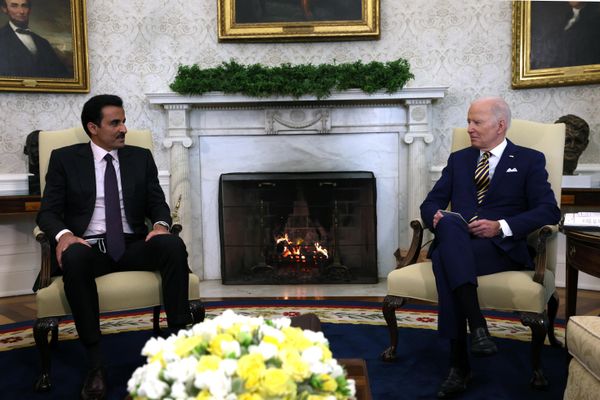 On Monday, US President Joe Biden designated Qatar as a major non-NATO ally after hosting its emir at the White House. Sheikh Tamim bin Hamad Al Thani was the first Gulf leader to meet with Biden in person since he became president. Biden and Tamim discussed how Qatar might supply more of its plentiful natural gas to Europe in case Russia’s President Vladimir Putin decides to turn off the tap in response to possible US/EU sanctions over the Ukraine crisis. That’s a long shot, given that 90 percent of Qatari gas exports are now tied up in long-term contracts — although Doha has ways to fill a short-term supply gap if needed. Still, the meeting tells us two things. First, Biden wants to make it harder for Putin to weaponize Russian gas. A gradual diversification of Europe’s energy supplies could eventually undermine Russia’s ability to blackmail the EU. Second, the fact that Tamim is publicly considering the idea means Qatar is ready to expand its geopolitical influence beyond the Middle East. Eurasia Group analyst Sofia Meranto says Qatar has much to gain from “being called on for help by the US to address energy questions in Europe.” It also signals the emirate’s “ability and ambition to play an outsized role in geopolitics.” It’s a dramatic turn of events for Qatar. The country of just 2.9 million people and the world’s second-largest exporter of liquified natural gas is famous for punching above its weight diplomatically. But doing so comes with risks. A year ago, Qatar emerged from a four-year blockade imposed by a Saudi-led group of fellow Arab states unhappy with Qatar’s ties to their rival Iran, support for the Muslim Brotherhood, and the negative media coverage they sometimes received from the Doha-based Al-Jazeera TV network. The blockade — which cut off the emirate by air, land, and sea from Bahrain, Egypt, Saudi Arabia, and the UAE — made the Qataris look (further) West for help. In fact, Qatar, which already hosts the largest US military base in the Middle East, has since become the go-between for Western powers doing business with some of the region’s most dangerous actors. For example, if you want to talk to the Taliban these days, call Qatar. The militant group now ruling Afghanistan has operated an office in Doha since 2013. The Qataris brokered the Trump administration’s 2020 peace deal with the Taliban in Afghanistan. Following the US withdrawal and the Biden administration’s refusal to formally recognize the new Afghan government, Doha is now America’s de-facto ambassador to the Taliban. In essence, Qatar helps Western governments talk to the Taliban without having to acknowledge the legitimacy of their brutal regime. The Qataris also sometimes pass messages between the US and Iran, drawing on the emirate’s warm ties with Tehran that other Middle Eastern states have long resented. Qatar supports ongoing talks to return to the 2015 Iran nuclear deal, and Iran wants Doha to help negotiate the release of dual-national Iranian-Americans jailed in Iran. Now, Qatar sees in the looming Ukraine energy crisis an opportunity to take its soft power onto an even bigger stage. And the timing could not be better for Doha.This November, Qatar will host the 2022 soccer World Cup, the most-watched sports competition in the world after the Summer Olympics. Will Putin attend? All eyes on Russia ahead of Putin-Xi meeting 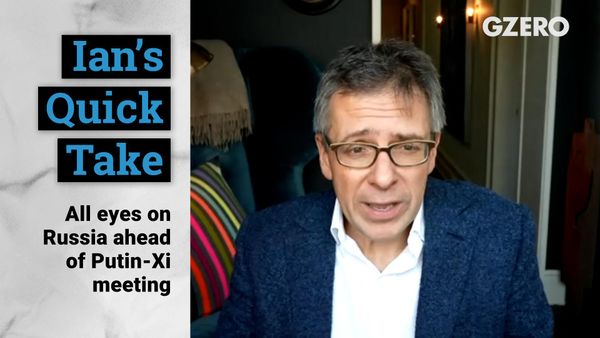 Everyone keeps asking the same question: will Russia invade Ukraine? For Ian Bremmer, the Russians are not quite there yet, but they certainly will be after the Beijing Winter Olympics.Meanwhile, there’s still time for diplomacy — and for deterrence. For instance, the Brits are threatening tough sanctions to make Putin think twice about anything he does to Ukraine, whether or not it’s a full-scale invasion.The Putin-Xi meeting later this week is perhaps the most important geopolitical summit we’ve had in years. Whatever comes out of that conversation will have big implications. It’s pretty clear at this point that the Russia-China relationship is moving from tactical to strategic and toward a real alliance.Watch Ian’s Quick Take here. Everyone keeps asking the same question: will Russia invade Ukraine? For Ian Bremmer, the Russians are not quite there yet, but they certainly will be after the Beijing Winter Olympics.Meanwhile, there’s still time for diplomacy — and for deterrence. For instance, the Brits are threatening tough sanctions to make Putin think twice about anything he does to Ukraine, whether or not it’s a full-scale invasion.The Putin-Xi meeting later this week is perhaps the most important geopolitical summit we’ve had in years. Whatever comes out of that conversation will have big implications. It’s pretty clear at this point that the Russia-China relationship is moving from tactical to strategic and toward a real alliance.Watch Ian’s Quick Take here.A message from our sponsor Walmart Walmart is creating educational pathways with the NAACP  Walmart is joining forces with the NAACP to offer the Empowering a Better Tomorrow Scholarship to assist in the creation of educational pathways for returning citizens. The scholarship will provide 20 recipients with a $5,000 award for a total of $100,000 in scholarships paid, being available to the formerly incarcerated. This is the first time a public company and the NAACP have teamed up to offer a scholarship of this kind. Learn more about Walmart’s commitment to opportunity through education. Walmart is joining forces with the NAACP to offer the Empowering a Better Tomorrow Scholarship to assist in the creation of educational pathways for returning citizens. The scholarship will provide 20 recipients with a $5,000 award for a total of $100,000 in scholarships paid, being available to the formerly incarcerated. This is the first time a public company and the NAACP have teamed up to offer a scholarship of this kind. Learn more about Walmart’s commitment to opportunity through education.What We’re Watching: More Boris drama, Orbán-Putin meeting, US governors vs Biden 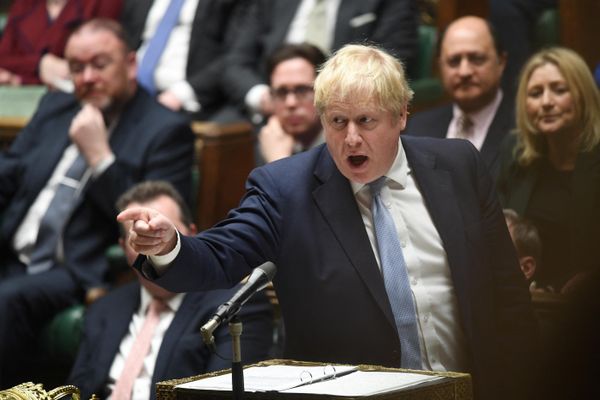 Boris Johnson’s stormy Monday. British PM Boris Johnson’s political life got even more complicated on Monday as the highly anticipated “Gray Report” went public, even in heavily redacted form. The report summarizes a parliamentary investigation of parties held at 10 Downing Street during periods of tight COVID restrictions. It remains redacted because many of the events detailed in it are under formal investigation by UK police. But the report still raises questions that Johnson struggled to answer — or simply evaded — during a stormy session of the House of Commons. MPs are drawing particular attention to a party that allegedly took place in Johnson’s residence on November 13, 2020. That damning detail could cost the prime minister support from members of his own party, because Johnson denied during a parliamentary session in December 2021 that any such event took place. If the unredacted Gray Report and police investigation reveal that he lied, it could mean the end of Johnson’s premiership.Orbán-Putin catch-up. Hungary’s populist PM Viktor Orbán travels to Moscow on Tuesday to meet with his pal Vladimir Putin. The timing of the trip is awkward a day after US-Qatar talks to undermine Russia’s natural gas leverage over Europe, and just as the EU — to which Hungary belongs — is trying to coordinate a unified response to Russia’s encroachment on the Ukrainian border. But Orbán, who is facing a close election this spring, has his own reasons for cozying up to the Kremlin. Amid a natural gas shortage in Europe, Budapest is looking to shore up supplies from Moscow (the two states recently inked a new 15-year energy deal). With inflation in Hungary so high that it has prompted government price caps on certain products, Orbán also wants greater cooperation from Moscow on food supplies. Brussels and Budapest have long clashed over the primacy of EU law, so the Ukrainian crisis is just the latest issue driving a wedge between Hungary and the bloc.COVID in America. America’s pandemic response has long been politicized, with leading Democrats mostly supporting President Joe Biden’s containment measures, and many Republicans opposing them. Now a group of bipartisan governors want the Biden administration to change tack because they believe omicron has brought the country to the endemic stage of COVID. To return to normal, they said after meeting with Biden on Monday, the public needs to “learn to live” with the virus. This comes as the omicron wave recedes in parts of the country, including the northeast, which bore the brunt of it. Still, hospitalizations remain high in many states. The division captures the president’s predicament: he’s desperate to return the US to something resembling “normalcy” before November’s midterm elections. Meanwhile, Biden’s chief medical advisor Anthony Fauci is urging caution and refuting the notion that we are in the endemic stage. Boris Johnson’s stormy Monday. British PM Boris Johnson’s political life got even more complicated on Monday as the highly anticipated “Gray Report” went public, even in heavily redacted form. The report summarizes a parliamentary investigation of parties held at 10 Downing Street during periods of tight COVID restrictions. It remains redacted because many of the events detailed in it are under formal investigation by UK police. But the report still raises questions that Johnson struggled to answer — or simply evaded — during a stormy session of the House of Commons. MPs are drawing particular attention to a party that allegedly took place in Johnson’s residence on November 13, 2020. That damning detail could cost the prime minister support from members of his own party, because Johnson denied during a parliamentary session in December 2021 that any such event took place. If the unredacted Gray Report and police investigation reveal that he lied, it could mean the end of Johnson’s premiership.Orbán-Putin catch-up. Hungary’s populist PM Viktor Orbán travels to Moscow on Tuesday to meet with his pal Vladimir Putin. The timing of the trip is awkward a day after US-Qatar talks to undermine Russia’s natural gas leverage over Europe, and just as the EU — to which Hungary belongs — is trying to coordinate a unified response to Russia’s encroachment on the Ukrainian border. But Orbán, who is facing a close election this spring, has his own reasons for cozying up to the Kremlin. Amid a natural gas shortage in Europe, Budapest is looking to shore up supplies from Moscow (the two states recently inked a new 15-year energy deal). With inflation in Hungary so high that it has prompted government price caps on certain products, Orbán also wants greater cooperation from Moscow on food supplies. Brussels and Budapest have long clashed over the primacy of EU law, so the Ukrainian crisis is just the latest issue driving a wedge between Hungary and the bloc.COVID in America. America’s pandemic response has long been politicized, with leading Democrats mostly supporting President Joe Biden’s containment measures, and many Republicans opposing them. Now a group of bipartisan governors want the Biden administration to change tack because they believe omicron has brought the country to the endemic stage of COVID. To return to normal, they said after meeting with Biden on Monday, the public needs to “learn to live” with the virus. This comes as the omicron wave recedes in parts of the country, including the northeast, which bore the brunt of it. Still, hospitalizations remain high in many states. The division captures the president’s predicament: he’s desperate to return the US to something resembling “normalcy” before November’s midterm elections. Meanwhile, Biden’s chief medical advisor Anthony Fauci is urging caution and refuting the notion that we are in the endemic stage.Hard Numbers: Chileans protest Venezuelan migrants, US rent on the rise, Myanmar coup anniversary, Benefits of Brexit 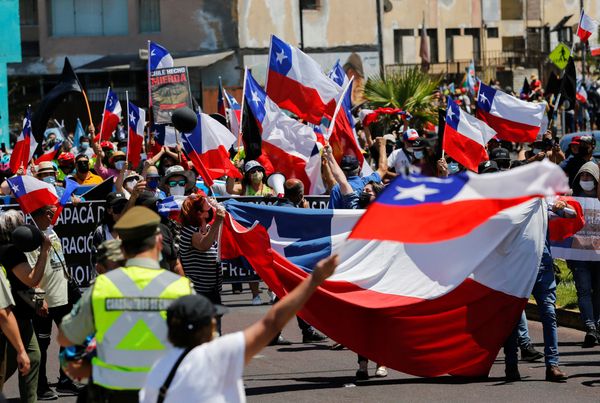 4,000: More than 4,000 Chileans demonstrated Monday in the northern city of Iquique against migration from Venezuela in response to a video of Venezuelan criminals attacking Chilean police at a checkpoint. Chile, one of South America’s wealthiest states, has seen a recent influx of migrants fleeing Venezuela’s deteriorating economy.40: Pandemic-related economic disruption upped rent by as much as 40 percent in some US cities last year, forcing thousands to find alternative living arrangements. Many local rent freezes and eviction moratoriums have expired, leaving lower earners vulnerable to homelessness and subsequent health risks.1,500: Around 1,500 people have been killed since Myanmar’s military staged a coup one year ago. Against the backdrop of sustained popular resistance, political stalemate persists, and the generals continue to quash all dissent.100: The UK government has released a new 100-page Benefits of Brexit report, outlining “how the EU is taking advantage of the UK leaving the EU.” This comes as London is preparing new legislation that will override some EU laws that remain in place. 4,000: More than 4,000 Chileans demonstrated Monday in the northern city of Iquique against migration from Venezuela in response to a video of Venezuelan criminals attacking Chilean police at a checkpoint. Chile, one of South America’s wealthiest states, has seen a recent influx of migrants fleeing Venezuela’s deteriorating economy.40: Pandemic-related economic disruption upped rent by as much as 40 percent in some US cities last year, forcing thousands to find alternative living arrangements. Many local rent freezes and eviction moratoriums have expired, leaving lower earners vulnerable to homelessness and subsequent health risks.1,500: Around 1,500 people have been killed since Myanmar’s military staged a coup one year ago. Against the backdrop of sustained popular resistance, political stalemate persists, and the generals continue to quash all dissent.100: The UK government has released a new 100-page Benefits of Brexit report, outlining “how the EU is taking advantage of the UK leaving the EU.” This comes as London is preparing new legislation that will override some EU laws that remain in place.This edition of Signal was written by Gabrielle Debinski, Tracy Moran, Carlos Santamaria, and Willis Sparks. Spiritual counsel from the Year of the Tiger — 新年快乐! Invite your friends to sign up for Signal here. Follow us: You are receiving this email because you opted in at gzeromedia.com or eurasiagroup.net. Update your preferences or unsubscribe from this list. View our privacy policy and terms of use. Copyright © 2022 GZERO Media. All rights reserved. 149 Fifth Avenue, New York NY 10010-6801 |
GZERO: “Soft Power”. High Stakes Qatari Diplomacy. “On Monday, US President Joe Biden designated Qatar as a major non-NATO ally after hosting its emir at the White House. ” and “This November, Qatar will host the 2022 soccer World Cup, the most-watched sports competition in the world after the Summer Olympics. “
 Posted by
  Who Watches the Watchers?