
 Posted by
Taoiseach attacked in DAIL
for refusing to expel Russian ambassador
15 hrs ago
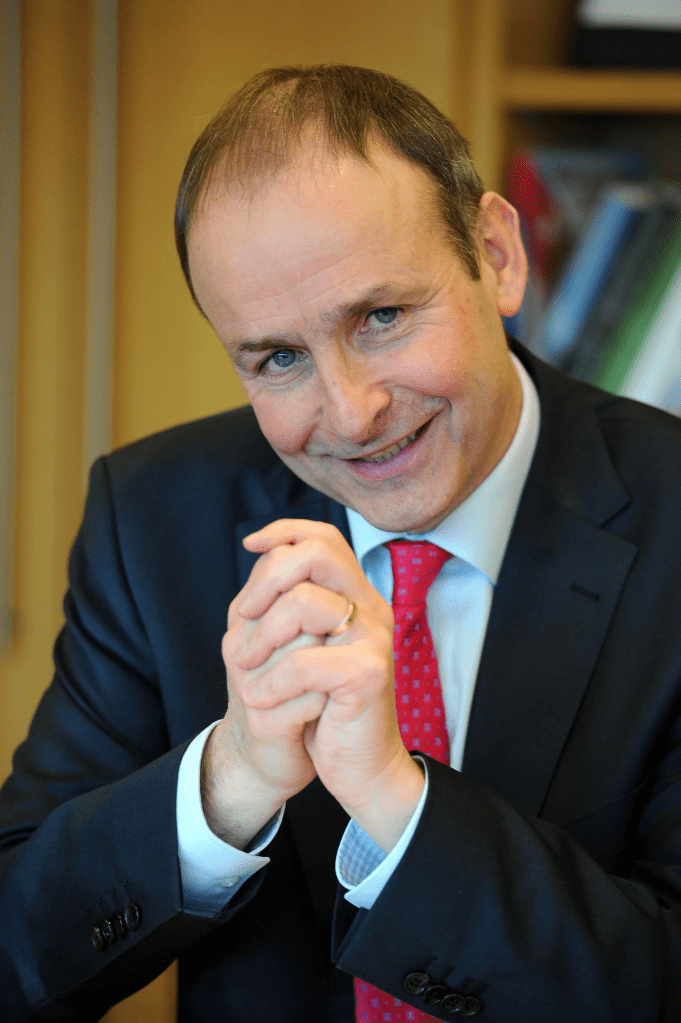
The Taoiseach has told the Dáil that Ireland will only act on the possible expulsion of the Russian Ambassador in concert with our European partners.
He admitted, however, that there was “revulsion and anger” towards envoy Yuri Filatov on foot of his public pronouncements on the Ukraine invasion.
But Micheál Martin also referenced Ireland’s six staff at our mission in Moscow in a suggestion that the Putin regime would resort to tit-for-tat measures.
Describing Mr Putin as “a bully and a thug,” Mr Martin said no European country is currently proposing the exclusion of any Ambassador.
“Our view is that it is important from a practical point of view, in looking after our citizens, either in Russia or in Ukraine, that we keep all channels open,” the Taoiseach said.
“Right now, we have a limited presence at the embassy in Moscow of six individuals, and it is a fundamental function to look after our citizens in Russia and also to articulate our views and to keep abreast of what’s happening within that jurisdiction,” the Taoiseach said.
“So I’m very conscious of that, while I understand fully the revulsion and anger towards how the Russian Ambassador has spoken on this war,” the Taoiseach said.
“Nonetheless, I think we have to keep cool heads, hold our nerve and keep the fundamentals in front of us all the time, in terms of looking after our citizens.”
Prominent Fianna Fáil backbencher Jim O’Callaghan criticised the Taoiseach’s reasons for not expelling the Russian Ambassador.
To the belief that Russia would retaliate by expulsions of Irish diplomats, Mr O’Callaghan said simply: “We should close our Embassy in Moscow.”
At the same time, diplomats in the Russian Embassy, which he noted was appropriately located in Orwell Road, should be told to pack their bags, he told the Dáil.
Mr O’Callaghan also criticised the idea that Ireland should only act in concert with other European countries, dismissing the idea that Ireland was importantly engaging in diplomacy with Russia in the current crisis.
Ireland had a proud record in taking independent leadership positions in world affairs going back many decades, he said.
As to the belief that Russian would listen to Ireland, “there is no interest in listening to Ireland,” he said.
“The second reason as to why we don’t do it (expel the Ambassador) is because we are told that is important to ensure that there is a decision that is made collectively by the European Union.”
But he pointed out: “Foreign policy is a competency of this country. We should stand up proudly and lead the way diplomatically, in saying that we want to get rid of the Russian Ambassador from this country.”
Different decisions had already been made by member states within the European Union as a result of the crisis, he said.
“Some of them are participating militarily, while others – such as ourselves – are not.
“So it’s not correct to say that we have to act collectively as a European Union. By doing so we are undermining our strength as an independent country.”
An independent TD proposed what he said a “possible compromise” – that Ambassador Filatov be banned from Leinster House and its precincts.
Cathal Berry, a former commander of the Army Ranger Wing, said the envoy had come to the Dáil and told lies in the “people’s house.”
As a result of popular revulsion for those lies, “he should be banned from here,” he said.
“If the (foreign affairs) minister wishes to have negotiations with the Russian ambassador, he can bring him into Iveagh house, he said.
“I hope his language will neither be parliamentary or diplomatic in that regard.”
Mr Berry also called for a ban on Russian shipping putting into Irish ports, or availing of territorial waters, as has been instituted by the United Kingdom.
Earlier Micheál Martin also said the unprecedented sanctions were having an effect, and the stress on the financial system “could lead to a run on Russian banks.”
All entities in the State are obliged to comply with European Union sanctions, he added, in response to Ms Murphy’s suggestion that secretive entitles would attempt to get around them.
“A breach of financial sanctions is a criminal offense. Accounts, funds or other assets must be frozen without delay,” Mr Martin said.
He revealed that the Central Bank has undertaken an initial review of the links between approximately 3,000 Irish-domiciled special purpose entities (SPEs).
Three had a Russian sponsor, meaning they were established on behalf of a Russian company, he said, and were covered by the first round of sanctions. Work was underway in relation to other sanctions packages, he said.
“The total assets of these Special Purpose Entities is about €36 billion, largely comprised of loans to Russian companies. Total Russian assets held on 31 December 2021 are estimated at €11.4 billion, or 0.3pc of total Irish fund assets of €3.8 trillion, he said.
There were also beneficial ownership registration requirements to enhance transparency and to help combat money laundering activities, Mr Martin said.
 Who Watches the Watchers?