
 Posted by
 =============
=============
“We beat Nato on motor cycles…Allah is on our side…” What can we learn about Hamas through a documentary that deals with the Taliban?
669,089 views Nov 4, 2023 #dwdocumentary#Afghanistan#documentary 15 August 2021 marked a turning point for Afghanistan. That was the day of the final withdrawal of western troops. It’s also when the Taliban entered Kabul. Protest movements were crushed. Twenty years of hope and effort – gone, in one fell swoop. After the 9/11 attacks on the United States and the ensuing “war on terrorism” declared by George W. Bush, Afghanistan had changed. Now, the Taliban are back in charge and the country has slipped back into the past. As the undisputed rulers of the country, the Taliban satisfy their thirst for revenge and behave as “victors” over the U.S., the “greatest military power” in the world. Their goals can be summed up in a few words: Restoration of the “Islamic Emirate of Afghanistan” and the introduction of “genuine Sharia law.” The new Taliban leaders continue to rely on international donors. As a result, they are trying not to offend them too openly. But they are tightening the noose. The few protest movements that have started have been nipped in the bud. Reprisals are handled discreetly. Civil society, which has been abandoned by the West and no longer receives financial resources, is helpless in the face of the new circumstances. Twenty years of hopes and efforts have been dashed. What do the Taliban want for their country? “The future is in Allah’s hands,” says the new refugee minister, Chalil Hakkani, on whom the U.S. has meanwhile placed a five-million-dollar bounty. Patrick de Saint-Exupéry and Pedro Brito da Fonseca toured Afghanistan in 2021 before, during and after the arrival of the Taliban. This film documents what they saw.

5th November 2023
ISRAELI forces violently assaulting a young Palestinian man with down syndrome

6th November 2023
Do we see how useless our ‘leaders’ are now? #GazaGenocide #CeasefireNOW
===============
6th November 2023
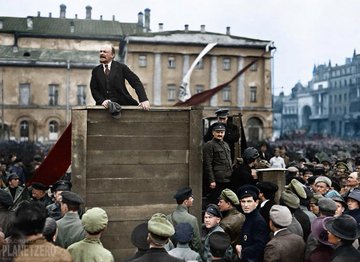
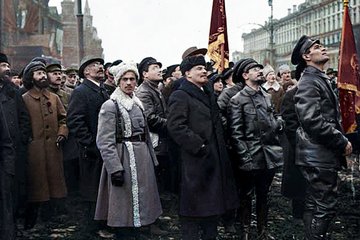
Red October: OTD in 1917, the Bolshevik Revolution led by Vladimir Lenin began with the storming of the Winter Palace This would lead to the founding of the Soviet Union ☭-the world’s first socialist state, transforming it from a semi-feudal state into an industrial superpower


6th November 2023
Thousands of Gazans working in Israel had their permits cancelled after 7 Oct. Approximately 6,000 of them are now displaced in the West Bank. Some of our patients in #Jenin report being beaten, humiliated, and abused by Israeli forces. Find out more: https://bit.ly/47kuT8
=============
6th November 2023
The Irish Government has been warned by the United States of potential attempts by Russia to interfere in upcoming elections.

6th November 2023
An empty gesture designed to create the pretence that the EU has any concern for Palestinian civilians.
stands with Israel and therefore stands with genocide. It is a travesty of law and morality. Disgusting that this is the best we can do.
===========
5th November 2023
A must read #GazaGenocide
Quote

Al Jazeera English
@AJEnglish
5th November 2023
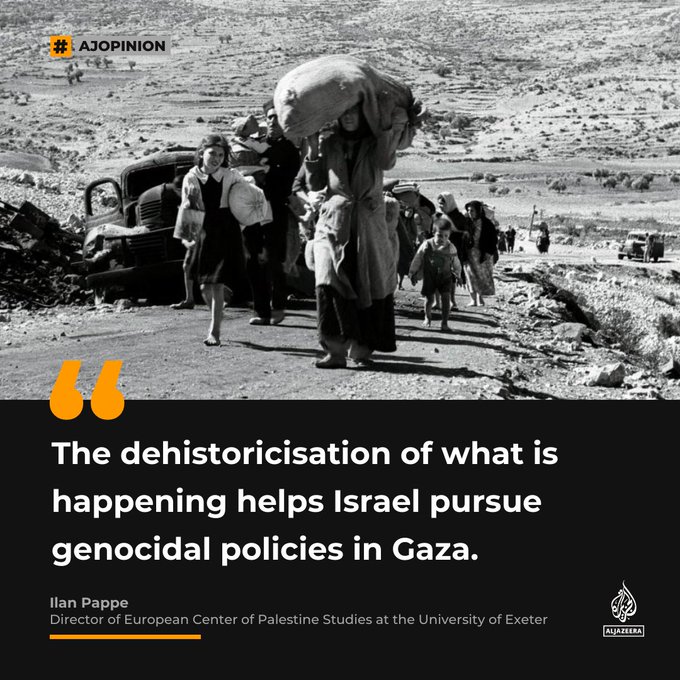
Why Israel wants to erase context and history in the war on Gaza — #AJOpinion by Ilan Pappe. : http://aje.io/923suq
=============
6th November 2023
NATO
·
NATO views disinformation as the deliberate creation and dissemination of false or manipulated information with the intent to deceive or mislead. Tap the picture to learn more about NATO’s approach to countering disinformation 

==============
GIS ReportsSearch for:
POLITICSFEBRUARY 21, 2018
Israel and Hezbollah: The war nobody wants may be about to happen
It may already be too late to avoid another armed conflict in the Middle East. Iran has systematically upgraded Hezbollah’s ability to strike at strategic and civilian targets deep inside Israel. Increasingly, the only viable option for Israel’s military to neutralize this threat is another invasion of southern Lebanon.
In a nutshell
- The outbreak of open hostilities between Israel and Hezbollah appears imminent
- The conflict could start through escalation of a local incident or at Iran’s instigation
- Even more likely is that Hezbollah’s growing capabilities prompt an Israeli first strike
Aglum conviction is growing among military and political professionals that a war between Israel and Hezbollah can no longer be avoided. The war will bring untold destruction because both sides have developed their military capacities far beyond those of 2006, when the Second Lebanon War started. The question is when hostilities will break out and what will be the trigger.
The answer to the first question is rather simple, if you listen to the official versions from Israel and Hezbollah: not anytime soon. The triggering event could appear random or accidental, but would most likely take one of three forms. A local incident could spiral out of control in a tit-for-tat cycle of escalating reprisals; Iran could try to strengthen its position in Syria by ordering its proxy, Hezbollah, to attack Israel; or Israel might decide on a preemptive strike to prevent Hezbollah from crossing a red line or acquiring unacceptable military capabilities.
The first possibility is very real. A misunderstanding or sudden local development elicits a violent response, starting a process that leads to full-blown war. It has happened before. In 2006, Hezbollah ambushed an Israeli Defense Forces (IDF) patrol along the border, killing three soldiers and kidnapping two others, using mortar attacks on another sector as a diversion. Under heavy shelling, Israeli soldiers vainly pursued the kidnappers into southern Lebanon in the hope of rescuing their comrades. Hezbollah then unleashed another barrage of missiles into northern Israel, and war began in earnest.
Hezbollah was originally created to spearhead the Islamic revolution in the Middle East.
It nearly happened again in January 2015. An Israeli strike on a convoy on the Syrian side of the Golan Heights killed several Hezbollah leaders, together with senior commanders of the Iranian Revolutionary Guards Corps (IRGC) on the way to set up an advanced outpost to launch attacks against Israel. In response, Hezbollah planned a spectacular revenge operation that could have led to an all-out war. This time it selected for attack an Israeli column near the Har Dov region. However, the barrage of anti-tank missiles “only” destroyed a light truck and killed two IDF soldiers. Hezbollah declared that honor had been served and both sides decided to call it quits.
Iran’s brainchild
It must be remembered that Hezbollah (“the party of Allah”) was Iran’s brainchild, created in the 1980s to spearhead the Islamic revolution’s activities in the Middle East. The movement is financed, trained and equipped by the IRGC. It has proved quite successful, fulfilling its mission of establishing a permanent base in Lebanon and becoming a military and political force to be reckoned with. Hezbollah remains an ever-present threat to Israel, which it intends to destroy someday, capping Iran’s ambition of creating a Shia crescent over the whole Middle East – preparatory to extending its domination to Europe and the world.
Hezbollah was forged in fire during the First Lebanon War in 1982. In the so-called Peace for Galilee operation, Israel forces invaded south Lebanon to put an end to repeated attacks from the Palestine Liberation Organization. Hezbollah militants attacked Israeli positions; they later targeted the multinational force tasked with supervising the evacuation of PLO fighters from Beirut to Tunisia. They are also believed responsible for twin truck bomb attacks in October 1983 on barracks housing international peacekeepers in Beirut; 241 U.S. Marines and 58 French soldiers were killed.
Operating against the Israeli security belt inside southern Lebanon, Hezbollah ultimately forced the IDF to withdraw.
From then on, the organization assumed the mantle of Lebanon’s sole armed resistance and protector against Israel. This claim gave it the legitimacy to bear arms even after the Taif Agreement of 1989, which ended the Lebanese civil war and stipulated that all militias had to be disbanded. Hezbollah operations against the Israeli security belt inside southern Lebanon ultimately led the IDF to withdraw from this territory in 2000. The organization has since gone from strength to strength, becoming the de facto ruler of Lebanon. Secretary-General Hassan Nasrallah, Hezbollah’s leader, regularly delivers impassioned speeches vowing to destroy Israel from his underground bunker, punctuated by hints that the time is not ripe yet. These speeches are broadcast and displayed on outdoor video screens through the country.
Lebanese launchpad
According to United Nations Security Council Resolution 1701, which ended the 2006 Israel-Lebanon war, there should be no Hezbollah presence in southern Lebanon. Only the Lebanese Army should remain, together with the United Nations Interim Force in Lebanon (UNIFIL), to supervise the peace agreement’s implementation. But both these forces have turned a blind eye to Hezbollah’s blatant violations, perhaps fearing a violent confrontation.
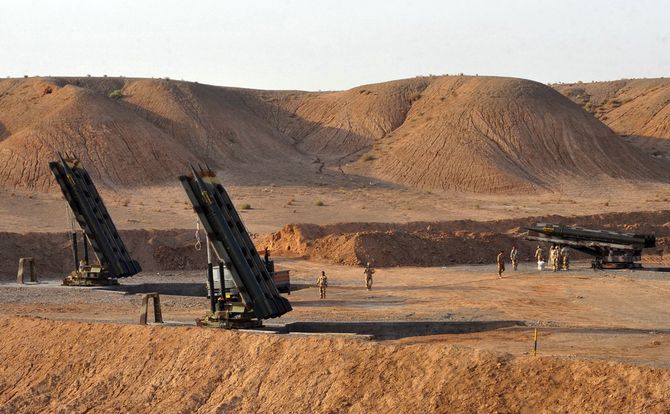
The organization openly moved huge stockpiles of munitions to the south, stashing them in underground tunnels sited beneath civilian houses, often in the middle of otherwise peaceful villages. These missiles can be brought up by hydraulic lifts and launched in a matter of minutes, making them hard to detect and almost impossible to destroy except by ground operations.
Any attempt to take out these batteries would necessarily involve civilian casualties, which Hezbollah would find useful for propaganda purposes. The IDF has repeatedly warned the villagers of this danger, but the locals are naturally more afraid of the immediate threat posed by the militants. Should war break out, however, there would be an exodus, as tens of thousands of civilians hit the roads.
The Israeli military estimates Hezbollah has some 150,000 rockets and missiles in southern Lebanon – mostly small Katyusha rockets and other short-range weapons. However, the organization’s military arm is in the process of developing and deploying longer-range, “smart” missiles far deeper in Lebanon, north of the Litani River. These missiles will be harder for the IDF to reach and capable of striking with a great deal of precision civilian and military targets all over Israel – including the nuclear reactor at Dimona, according to public threats by Iranian Revolutionary Guard commanders. This kind of vulnerability can have a devastating effect on morale.
Israeli interdiction
Iran has made determined attempts to deliver more and more sophisticated missiles to Hezbollah by the overland route through Syria. According to General Amir Eshel, a former commander of the Israeli air force, more than 100 bombing missions have been flown in recent years against supply convoys or temporary depots for this advanced hardware on Syrian territory. No matter how effective these air strikes are, they cannot stop all shipments.
Iran is also assisting Hezbollah with technology and know-how to increase the range, payload capacity and accuracy of their weapons. An attempt to build a missile factory near Damascus was thwarted by an Israeli strike in December. Iran’s first attempts to manufacture smart missiles on Lebanese soil appear to have been shelved due to Lebanese opposition and Israeli threats to bomb them before completion. However, the urgency of the situation was shown by the IDF’s decision to publish an op-ed in Arab media and on Lebanese opposition websites on January 28. The piece warned that Hezbollah was turning Lebanon into a large missile factory and that the country’s citizens should act before it was too late, since the Israeli red line was fast approaching.
Israel would find missile attacks on such a scale impossible to block completely.
Should war start, Hezbollah is credited with the potential to launch missiles at the rate of 1,000 to 1,500 a day. They would be met by impressive and innovative Israeli defenses– including the Iron Dome, David’s Sling and Arrow 2 anti-missile systems – but attacks on such a scale would be impossible to block completely. Therefore, Israel has repeatedly warned Lebanon’s government that it would be held responsible for any attacks from its territory, and should expect a devastating riposte that would lay waste to the country’s vital infrastructure. The Israeli objective here is to force the Lebanese authorities and the international community to act decisively to stop the war.
Military balance
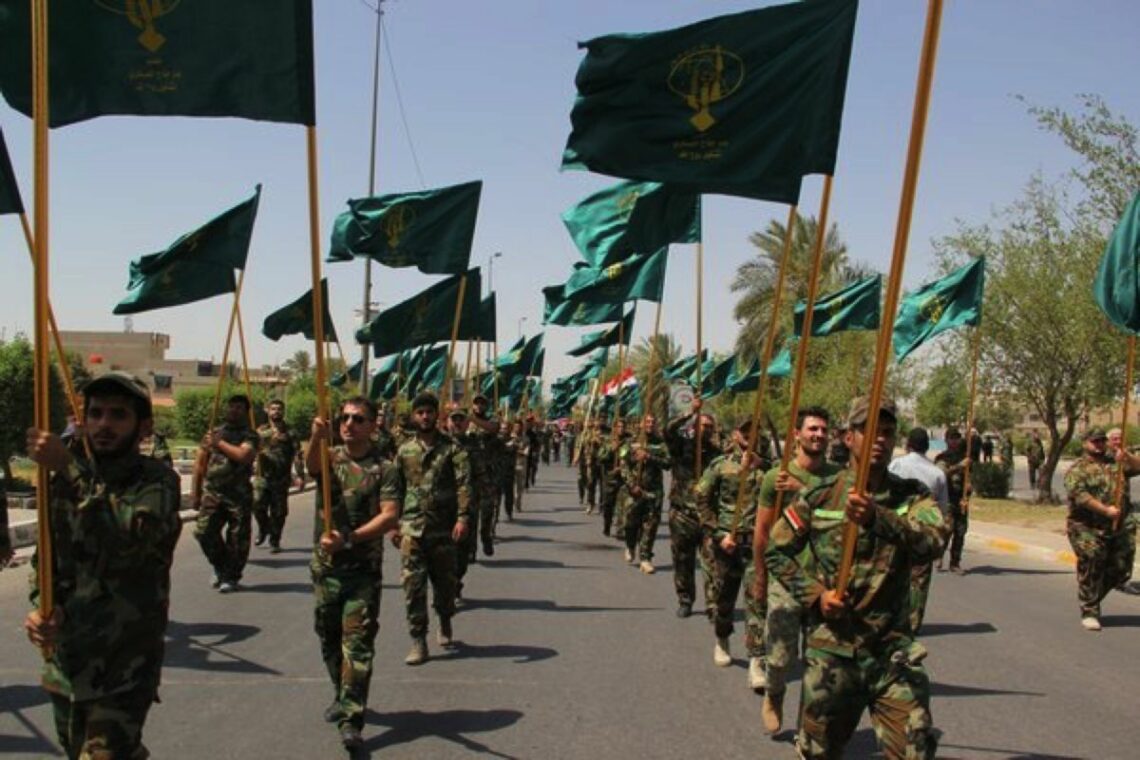
Hezbollah’s military strength is estimated today at between 20,000 and 25,000 fighters, with an additional 20,000 in reserve. Of the regulars, about 8,000 have been deployed on Iran’s instructions to Syria, where they have been fighting since 2013 to preserve the regime of President Bashar al-Assad. Casualties have been high – as many as 2,000 dead and thousands more wounded – but the survivors are seasoned troops, capable of handling tanks and armored vehicles that may well be provided by the Lebanese army in case of invasion.
Mr. Nasrallah extolls the capabilities of these troops, warning that they would not stay on the defensive in a new conflict but would take the war to Israeli soil, crossing the border to seize villages in Upper Galilee. This is possible, according to Israeli military leaders, though the invaders would be driven back quickly. Nevertheless, pictures of Hezbollah militants parading among Israeli civilians would be acclaimed throughout the Arab world.
Another boast of Mr. Nasrallah’s is that tens of thousands of fighters from the pro-Iranian Shia militias would rush to help. This overlooks that it would deprive Hezbollah of its greatest asset in the face of crushing Israeli conventional superiority – stealthy guerilla tactics. Crowds of poorly trained irregulars would count for little against the well-organized and highly capable IDF, with its long experience in combined ground, sea and air operations.
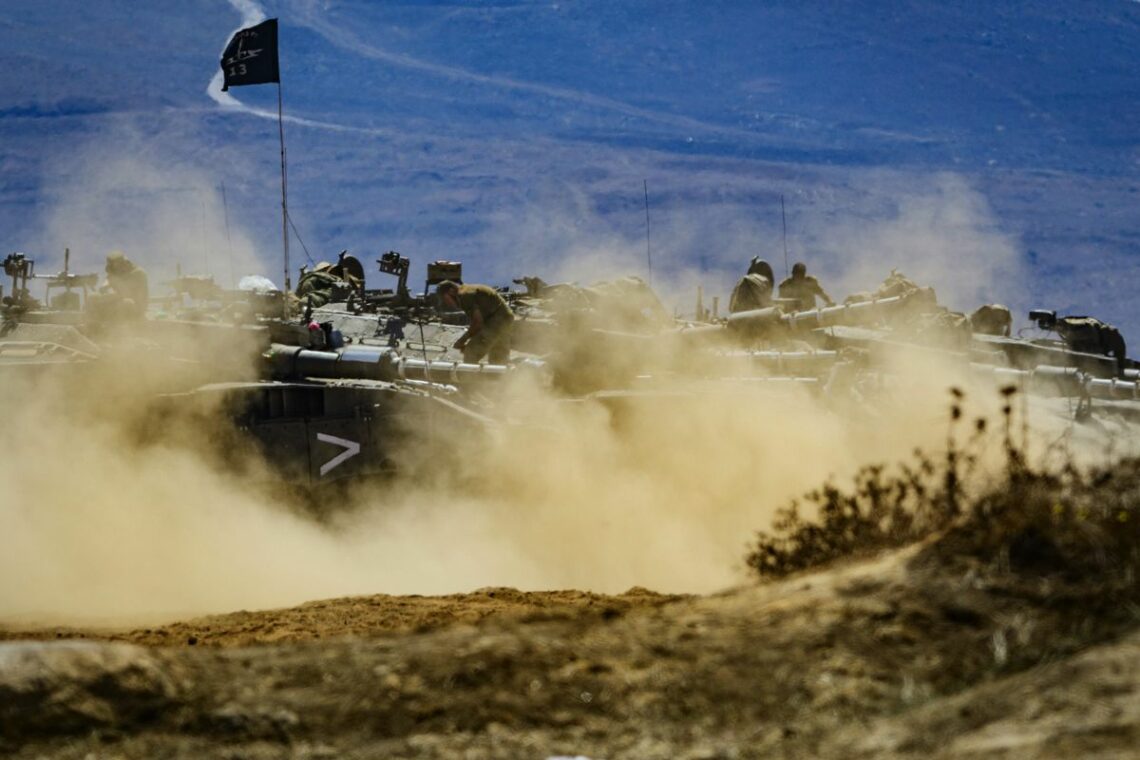
Even setting quality aside, sheer numbers tell the story. According to publicly available sources such as globalfirepower.com, the IDF can muster a total of 718,250 trained men and women on active service and in combat-ready reserves, 652 aircraft, 2,620 main battle tanks, 10,185 armored fighting vehicles and 65 naval vessels, including six submarines. With such power at its disposal, Israel’s military strategy is straightforward, according to an October 2017 report by the High Level Military Group: “By combining overwhelming military force … and the intelligence required to direct it, the IDF would seek to end a future war quickly, before the Israeli home front would sustain heavy casualties.” Yet this approach does not guarantee Hezbollah’s missiles can be completely neutralized.
Obviously, Israel is preparing for the worst. Sophisticated obstacles and monitoring systems have been installed to impede cross-border infiltration and incursions – including smart fences and dynamiting rock formations to create unscalable sheer walls. Plans for temporary evacuation of the those most threatened localities have also been prepared.
Scenarios
Escalation after a local incident remains on the table, even though both sides are aware of the price it would entail. Iran, now well entrenched in Syria, might decide, together with Hezbollah, that though the odds of defeating Israel are slight, that country would emerge weakened from a conflict. This would be a major blow to the Sunni countries in their confrontation with Tehran. Most probably, Iran would not engage directly in the fight. Hezbollah would bear the brunt, with covert assistance from the IRGC and reinforcements from the Shia militias.
This scenario cannot be regarded as probable while the war in Syria goes on and the Assad regime is not secure. Mr. Nasrallah did say that his militants could fight on two fronts – Syria and Israel – but this seems doubtful. He would have to contend with very vocal opposition from most Lebanese, who fear the destruction war would bring. At best, this opposition could diminish Hezbollah’s political influence; at worst, it could trigger a new civil war.
Should Shia militias use Syria as a springboard to attack Israel, Russia would be put in a difficult position. Moscow might well put a stop to the war before it starts to protect its newly acquired bases and prevent its efforts to stabilize Syria from being squandered.
That leaves the possibility of preemptive action by Israel, which is closely following Hezbollah’s bellicose declarations and preparations. Should the Israelis consider that a red line is about to be crossed, they might launch a massive first strike on missile sites and factories in the Bekaa Valley, Hezbollah strongholds in the southern suburbs of Beirut, and other strategic sites. Hezbollah, of course, would retaliate.
These possibilities have been incorporated into a strategy document prepared by the Israeli chief of the general staff, General Gadi Eizenkot, in 2015. It assumed the possibility that the IDF would have to fight on three fronts: against Hezbollah in the north, Syria-based Shia militias to the northeast, and Hamas in the south. The virtues and drawbacks of preemptive war have long been hotly debated in Israel, but today a broad consensus is emerging regarding the threat posed by Hezbollah. People remember that had Israel made a spoiling attack against Egypt in 1973, it might not have lost more than 3,000 soldiers in the October War.
In June 2017, the head of Israeli military intelligence, Major General Herzi Halevi, declared that “never before has the army known as much about an army as we know about Hezbollah. Nevertheless, war will not be simple, or easy.” Many interpreted this as a hint about a surprise attack on Hezbollah. Judging by declarations from senior Israeli officials and military leaders, it may come sooner than later.
ABOUT THE EXPERT

 Who Watches the Watchers?