
 Posted by
 ============
https://www.foreignaffairs.com/articles/united-states/1993-06-01/clash-civilizations
============
Quotes
=============
============
The US Propaganda Machine of World War I
As the United States prepared to enter World War I, the government created the first modern state propaganda office, the Committee on Public Information.
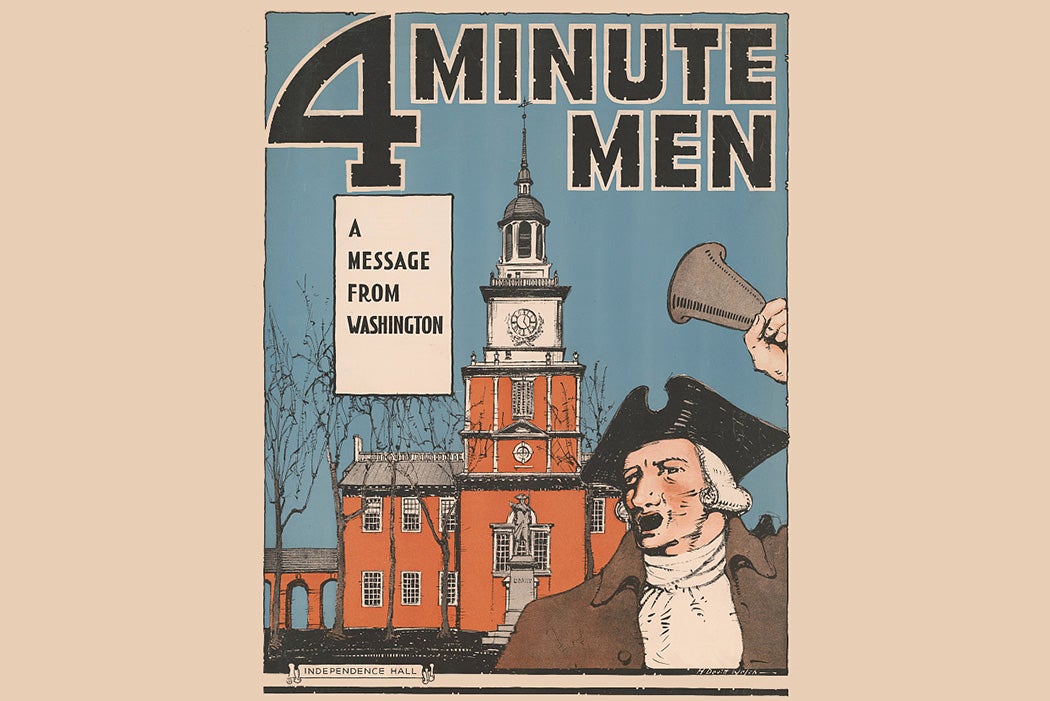
A 4 Minute men poster, 1917
Share
By: Livia Gershon
November 17, 2023
3 minutes
The icon indicates free access to the linked research on JSTOR.
In the mass media era, ideological fights are won and lost through the manipulation of public opinion. As historian Nick Fischer writes, many of the techniques used today were developed during World War I by a temporary government agency called the Committee on Public Information (CPI).

Woodrow Wilson ran for reelection in 1916 on a platform of keeping the United States out of the fighting in Europe. But, within a month of his inauguration, the nation had declared war on Germany. To sell this war of choice to the public, Fischer writes, the government founded the CPI as an unprecedented propaganda machine.
The CPI played a role in the intense censorship of media, communication, and speech during the war. But its main function was spreading pro-war messages, including the cartoonish portrayal of German enemies as “the Hun.” The committee’s fourteen departments hired artists, filmmakers, journalists, novelists, and other creative types. Professionals of all political stripes eagerly joined the effort, seeing the promotion of patriotism as a way of serving the public good.
At a time before national radio networks, Fischer writes, the government spread its chosen messages not only through films and posters but with a national network of volunteers. The CPI trained these “Four Minute Men” (a play on the Minute Men of the American Revolution) to give short speeches using talking points crafted by historians and rhetoricians. The volunteers spoke at churches, fraternal organizations, women’s clubs, and colleges. By the end of the war, CPI head George Creel claimed that about 75,000 Four Minute men had delivered more than 750,000 speeches, reaching 315 million people.
The CPI also went global, establishing offices across Europe and Latin America and in China to influence the local media. The largest of these was in Moscow, where it led an anti-Bolshevik media campaign. This included the spread of false information, including supposed evidence that the revolutionaries were agents of the Kaiser.
The success of World War I propaganda led directly to the creation of the public relations industry, under the leadership of CPI veteran Edward L. Bernays.
“Propaganda had been so obviously valuable in the war that it revolutionized the standing of advertising and marketing experts among corporate leaders,” Fischer writes.
Political partisans also picked up on the techniques used by the CPI. The American Legion in particular developed its own system for advancing agendas like requiring patriotic displays in the classroom and making teachers swear loyalty oaths. Like the CPI, it crafted messages at headquarters and distributed them through local volunteers around the country.
Weekly Newsletter
Get your fix of JSTOR Daily’s best stories in your inbox each Thursday.
 Who Watches the Watchers?
