
 Posted by
 Updated / Thursday, 6 Jun 2024 23:29
https://www.rte.ie/news/primetime/2024/0606/1453341-internal-files-reveal-breach-of-trust-at-major-housing-charity
Prime Time
Internal documents obtained from inside one of Ireland’s largest housing and homelessness charities, the Peter McVerry Trust, show significant breaches of trust between it and donor organisations, and cast new light on issues raised about its corporate governance.
The documents seen by Prime Time show that over a six-year period up to €40m in restricted donations – money given to the charity to be spent on a specific purpose – was diverted for other purposes, including to cover running costs by the charity.
The McVerry Trust is in financial difficulty and is currently being investigated by the Charities Regulator and the Approved Housing Bodies Regulatory Authority.
The documents show that in September 2022 the Capuchin Day Centre for Homeless People charity, which runs a well-known and busy soup kitchen in Dublin, donated €4.73m to the McVerry Trust.
Both charities signed a 25-page legal agreement which dictated that the McVerry Trust use the money to purchase properties for social housing. One of the signatories of the agreement was then McVerry Trust CEO Pat Doyle.
Some €1.6m of the donation was given specifically to purchase a named large property in north Dublin to house unaccompanied minors fleeing war in Ukraine.
Yet, just two weeks after he signed the agreement, Pat Doyle emailed the then head of finance at the McVerry Trust, with an instruction to “transfer €1.6 million from the Capuchin Restricted Capital Account to the Capital Development Account.”
According to an internal finance report, €1.3m of that Capuchin money was then “immediately withdrawn” to pay charity debts including debts to the Revenue Commissioners and two firms who were creditors of the McVerry Trust.
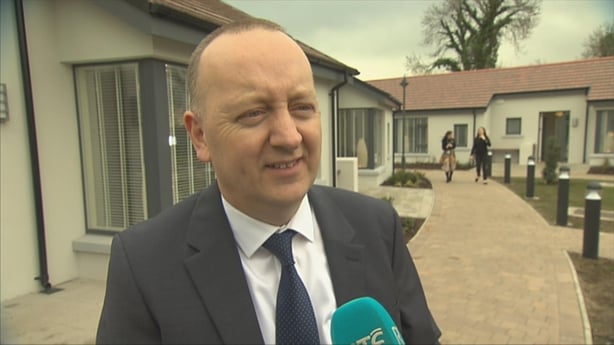
The email sent by the CEO to the head of finance was “a betrayal of trust,” said Jillian van Turnhout, a Chartered Director Certified in Corporate Governance.
“The Capuchins had given the money for a very specific purpose. It was explicit,” she said.
She added that seeing an email that “violates that agreement in such a short space of time and such a clear manner, it makes me question, where were the controls in place in an organisation that one person could instruct in that way?”
“The Charities Regulator requires that monies are used for the purpose they’re raised,” said David Hall, a businessman with a long history of involvement in charities at board and executive level.
“It’s part of not misleading the donors. To have that trust broken will cause great difficulty,” he said.
Pat Doyle declined an interview request, but in response to a detailed list of questions, he said that he has “engaged and cooperated fully” with the regulators’ investigations.
He said the intent of his cooperation was to “set out a clear rationale for some of the decisions made within the Peter McVerry Trust and to give proper context to same, to clarify some inaccuracies and to correct some errors”.
A further €1.2m donated by the Capuchins to buy three named properties in Dublin 7 for homeless families was also not used for the purpose that the Capuchins specified, the documents show.
Neither was €1.5m donated to buy another large North Dublin facility to provide “long-term supported units for homeless persons with chronic health issues.”
In another breach of its legal agreement, €350,000 of the Capuchin money was transferred to a non-profit company, now called NDP Counselling and Psychotherapy. It is unclear why such a large sum of money was transferred to NDP as it did not provide services to the Peter McVerry Trust.
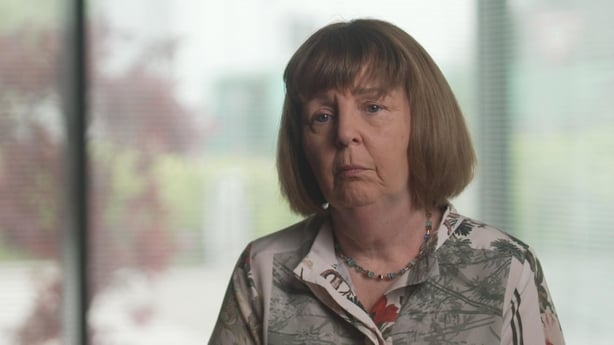
“There was no commercial link… there was no service link,” said David Hall.
After discovering the €350,000 transfer to the psychotherapy company, Mr Doyle’s replacement as CEO, Francis Doherty, who resigned after less than five months at the helm, requested that the money be returned to the McVerry Trust, and it was.
In the internal McVerry Trust documents, which post-date Mr Doyle’s departure in May 2023, NDP is described as an “an entity supported by PMVT [Peter McVerry Trust] and where the outgoing CEO Pat Doyle was to take up a permanent role.”
One document dating from September 2023, one year after the Capuchin donation was made, states that only 9% of the €4.73m donation, or €430,000, was used in accordance with the stated wishes of the donor.
The 25-page donor agreement dated 20 Sept 2022 outlines seven so-called “events of default”, which would allow the Capuchins to demand full repayment of the donation.
The first of those seven is “the application or use of the Donation by the Recipient other than for the Purpose.”
The €4.73m was the third significant donation by the Capuchin Day Centre to the Peter McVerry Trust in recent years. The two other donations were €5m each.

The Capuchin charity’s board told Prime Time that it had experienced “a surge in donations linked to Pope Francis’ visit to Dublin and to the Capuchin Day Centre” in 2018 and sought to link up with the Peter McVerry Trust to support the provision of social housing for homeless persons.
“This non-recurring initiative came to an end with the donation in 2022 and no further such initiatives are planned,” the Capuchin Day Centre board said.
It added that “all such donations were made with specific conditions in respect of how they were to be used and responsibility for their use in line with these conditions lies with Peter McVerry Trust.”
The Capuchin board declined to say if it had requested that its €4.73m be repaid.
The Peter McVerry Trust declined to provide answers to specific questions sent by Prime Time. It said it was continuing to cooperate with the regulators’ investigations.
Those investigations began when, within weeks of succeeding Pat Doyle as CEO, Francis Doherty alerted the Charities Regulator and the Approved Housing Bodies Regulator of significant cash flow and debt issues at the McVerry Trust.
The McVerry Trust said that it “continues its work with some of the most vulnerable people in our society, supporting approximately 3,000 individuals, families and children each week, including people who are homeless, people with mental health difficulties, and people experiencing addiction.”
“The Trust has implemented new organisational policies and procedures and it remains focused on delivering its services within its resources.”
The charity is one of the largest providers in the sector, with income in 2022 of €61.7m, around two-thirds of which came from the State.
A report on charities regulation by reporter Paul Murphy and producer Isabel Perceval is broadcast on the Thursday 6 June edition of Prime Time at 9.35pm, and also on RTÉ Player.
================

13 May 2024 / regulation Print
Charities urged to manage conflicts of interest
The Charities Regulator has acknowledged that conflicts of interest can arise in charities, but says that problems arise when they are not managed appropriately.
The watchdog has issued guidance to the boards of charities on how to manage such conflicts of interest effectively.
The regulator reminds charities that a trustee has a duty to act in the best interests of the charity.
“A conflict of interest is any situation in which a charity trustee’s personal interests or loyalties could, or could be seen to, prevent the charity trustee from making a decision in the best interests of the charity,” it states.
“This personal interest may be direct or indirect, and can include interests of a person connected to the charity trustee,” it adds.
‘Take the test’
The watchdog warns that failing to effectively manage conflicts of interest can affect the charity in terms of its governance and the associated reputational risk.
It advises trustees to take the ‘conflict-of-interest test’, and ask themselves: “Would a reasonable person (who was aware of the charity trustee’s personal interest) believe that you might be influenced by your personal interest when making a decision on behalf on the charity?”
If the answer is ‘yes’, then you have a potential conflict of interest, the regulator says.
Its guidance sets out steps that charities should take to identify, manage, and record conflicts of interest.
Share this article
Gazette Desk
Gazette.ie is the daily legal news site of the Law Society of Ireland
 Who Watches the Watchers?