
 Posted by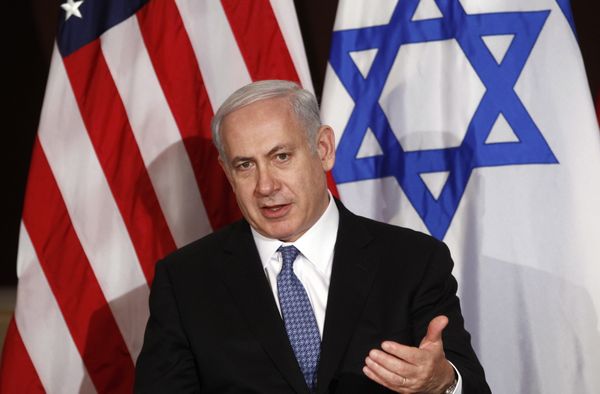
Mr. Netanyahu goes to Washington
Israeli Prime Minister Benjamin Netanyahu is addressing a joint meeting of Congress on Wednesday, visiting Washington at an awkward moment in US-Israel relations and amid ongoing international efforts for a cease-fire in Gaza.
Meanwhile, on the other side of the world, China helped facilitate an agreement between Hamas and its longtime political rival, Fatah, on Tuesday that would see the two Palestinian groups form a government together. Both Israel and the US have already thrown cold water on the deal, given their opposition to Hamas remaining in power in any capacity.
Netanyahu’s speech also comes at a chaotic time in US politics, with the country still reeling from the assassination attempt on former President Donald Trump as well as President Joe Biden’s decision to drop out of the 2024 race.
Tough crowd. Netanyahu’s prosecution of the war against Hamas in Gaza – and vocal opposition to a two-state solution – has made him unpopular with a number of Democratic lawmakers while also creating tensions with the Biden administration. Some Democratic lawmakers are expected to boycott his speech, and Vice President Kamala Harris, now the front-runner for the Democratic presidential nomination, will not preside over the Senate during the address due to a campaign event in Indianapolis.
Thousands are also poised to protest in the nation’s capital against the war in Gaza during Netanyahu’s visit, though pro-Israel demonstrators are also expected to turn up in Washington.
Given these circumstances, Netanyahu is likely to strike a more bipartisan tone than in the past and will probably focus on “the historical link and strategic value of the Israel-US relationship” in his speech, says Sofia Meranto, a Middle East analyst for Eurasia Group. During an address to Congress in 2015, Netanyahu controversially ripped into the nuclear deal with Iran that was being orchestrated by the Obama administration, infuriating many Democrats.
Netanyahu wants to use his Wednesday speech to “showcase that he has a unique relationship with US leaders — an argument he leans on domestically — and try to dispel sentiment in Israel that he has damaged the relationship with Washington,” adds Meranto.
The Israeli leader is set to meet with Biden and Harris on Thursday at the White House, followed by a meeting with Trump in Florida on Friday.
Hungary’s rift with the EU: Losing host privileges amid Ukraine controversy
EU foreign policy chief Josep Borrell announced on Monday that Hungary, which holds the presidency of the Council of the European Union, has lost the right to host the next meeting of foreign and defense ministers over its stance on the war in Ukraine.
The controversy: Hungary’s Prime Minister Viktor Orban visited Vladimir Putin in Moscow earlier this month and accused the EU of having a “pro-war policy,” spurring an uproar in Brussels.
Hungary is also upset about Ukraine’s decision last month to adopt sanctions blocking the transit of oil to Central Europe by Lukoil, sparking fears of supply shortages in Budapest. Hungary relies on Moscow for 70% of its oil imports — and on Lukoil, Russia’s largest private oil firm, for half that amount.
Budapest responded to Borrell by announcing that it would not refund EU members any of the 6.5 billion euros they expected for transferring arms to Ukraine unless Kyiv allows oil shipments from Lukoil to resume to Central Europe.
Why it matters: Since Russia’s invasion, member states that gave weapons to Ukraine have been able to ask for compensation for transferring munitions, giving Hungary monetary leverage to get the oil it wants. Hungary and Slovakia asked the European Commission on Monday to mediate with Ukraine, and the issue would go to court unless the EU executive body acts within three days.
Migrants rush to US border fearing Trump’s return
Hundreds of migrants from around a dozen countries left Mexico’s southern border area by foot on Sunday, heading north toward the US border. They hope to make it to the frontier before November’s election out of fear that Donald Trump could win and close the border to asylum-seekers.
Migrants in the group reported that they fear that a Trump administration might stop granting appointments to migrants through CBP One, an app used by asylum-seekers to enter the US legally — by getting appointments at US border posts, where they then make their cases to officials. The app only works in northern Mexico and Mexico City.
Trump is likely to use the caravan to make his case that the US needs a president who is tough on immigration. During the Republican National Convention, he promised to crack down on the border if elected, including increasing deportations of illegal migrants and making asylum-seekers wait in Mexico while their claims are processed.
If the caravan continues to make the headlines, it could be bad news for Kamala Harris, as she trails Trump on immigration and as a majority of Americans – some 55% – believe that immigration levels should be reduced for the first time in two decades.
 Who Watches the Watchers?