
 Posted by
 This striking home is an homage to the art of woodwork
Hannah Newton
Sun 8 Sep 2024 10.00 CEST
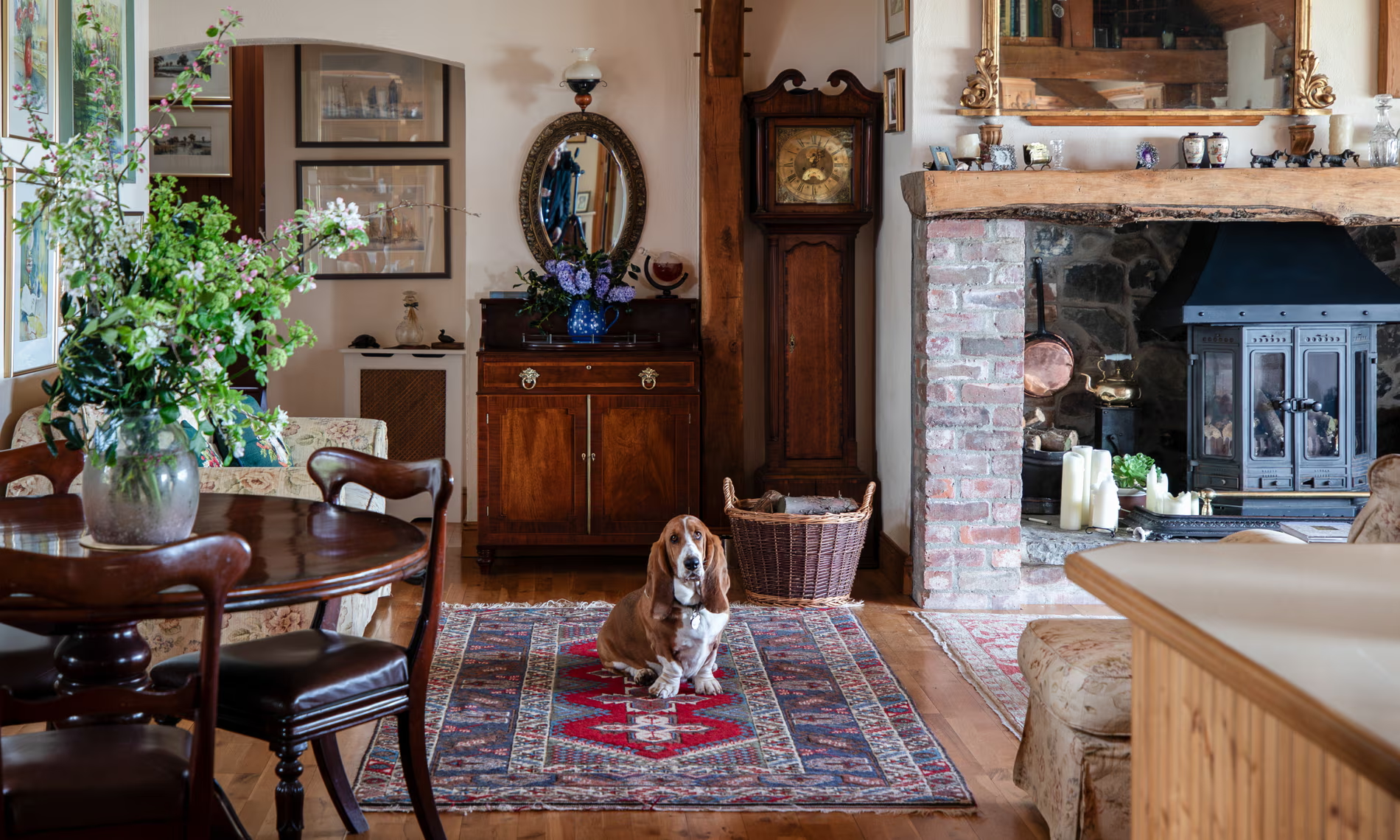
It all started with eggs. As a child in the 1950s in County Meath, Liz Pickett would collect dozens of eggs from the large wooden henhouse on her family’s farm, before walking to school. For more than a century, Liz’s family have lived on this bucolic windswept corner of eastern Ireland, just yards from 12 miles of overarching sandy shoreline, looking over the kinetic Irish Sea, where the range of blue on offer eclipses even the most committed watercolourist’s palette.
“It was Baltic in there today,” says Liz describing her daily dip in the sea. “But you feel great afterwards, you become addicted.” Liz, who lives with her husband, Roger, and their basset hound, Poppy, built their home in the early 90s on the site of the former henhouse. “We wanted to keep and preserve the old-world charm and feel when we designed it, so we decided to build a thatched cottage.”
Liz is in the serendipitous position of owning six 300-year-old thatched cottages, beside her own home. She inherited the fisher’s cottages and the former henhouse from her parents who, in turn, inherited them from theirs. Her grandfather, a merchant seaman, bought the lot at auction in 1908. “I am the fourth generation to live here, protecting the land and cottages, but really we feel like caretakers in time, just looking after it.”
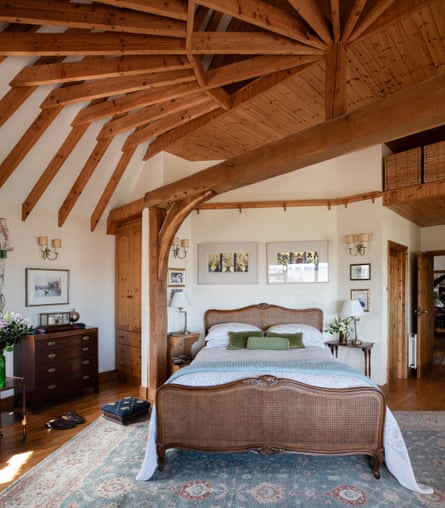
‘The beauty in the geometry, the curved shapes of the woodwork…’ warm tones in the bedroom.
After Liz met Roger, who is originally from London, they were dividing their lives between the two countries, but decided it was time to put firm roots down in Ireland. “We wanted our own home to blend in with the landscape, so we decided it should be thatched, to preserve that rustic feel. We textured the walls so they would look the same as the original walls on the other buildings, which were built from big, rounded sea-stones from the local quarry.”
Roger, an engineer and self-confessed frustrated architect, designed the structure, collaborating with master thatcher Paul Lewis from Suffolk, who arrived with 2,600 bundles of reeds cut from reedbeds at Walberswick, to thatch the roof, along with planks of pine and oak and a collection of huge oak branches chosen as wind braces, a traditional way to support beams.
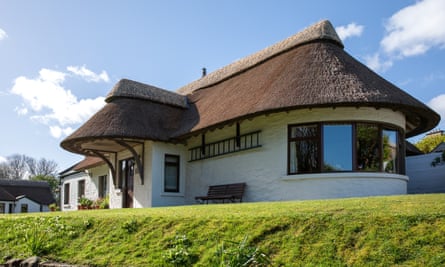
‘It had to blend in with the landscape’: the outside of the house.
Building the house took two years. Inside, the vaulted timber ceilings were left unplastered. “We could not bear the thought of covering up Roger’s design, the beauty in the geometry, the curved shapes of the woodwork and divine honey tones. They were just too beautiful, so we decided to leave them exposed,” explains Liz.
 Who Watches the Watchers?