
 Posted by
 ‘Deep shame’ |

Micheal Martin says Sophie Toscan du Plantier’s murder case should have gone before a jury
“The simple fact is, we failed in our duty to find and convict a bloody murderer”
Today at 20:56
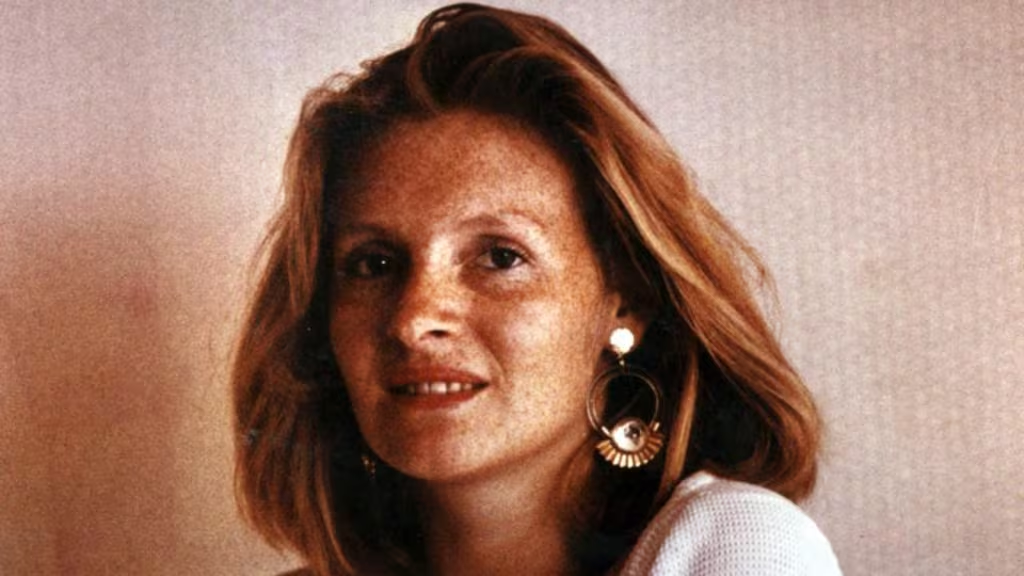
Micheal Martin has said he believes that the case against Ian Bailey for the murder of Sophie Toscan du Plantier should have gone before a jury.
He said that the murder of the French filmmaker remains “seared into our consciousness” and the fact that no one was convicted for her murder would “always be a deep shame for us”.
The Foreign Affairs Minister and Cork South-Central TD made the comments at the launch of the book Sophie: The Final Verdict by journalist Senan Molony in Dublin.
In December 1996, the body of the 39-year-old French filmmaker was found beaten outside her holiday home in Schull, West Cork.
Ian Bailey, who was the main suspect in her murder, died in Cork in January this year aged 66.
Mr Bailey, with an address at The Prairie in Schull, was convicted of murder in his absence by a French court in May 2019.

The three-judge court imposed a 25-year sentence.
“The terrible anguish of her family and all who knew her was made much worse by the fact that our system proved incapable of meeting its responsibilities to Sophie,” Mr Martin said on Thursday.
“However, there is no doubt that this case continues to give a serious cause for reflection.
“The simple fact is, we failed in our duty to find and convict a bloody murderer, and our system blocked alternative routes when others were not willing to accept our failures.”
In October 2020, the High Court in Ireland rejected an attempt by French authorities to extradite Ian Bailey for the murder.
Mr Bailey was facing a third extradition process to France in relation to the filmmaker’s death.
Mr Martin acknowledged there is “a balance” between seeking justice for a victim and respecting the rights of the accused.
“When you look at the details of this case and the scale of the evidence, it is very, very hard to understand why this evidence was not put before a jury,” he said.
“It’s hard to understand why the system was so convinced by its interpretation of legal principles that it effectively threw its hands in the air and gave up.”
 Who Watches the Watchers?