
 Posted by
 Iran launches new research satellite Chamran-1 into orbit
Tehran says its satellite launches are civilian in nature but the West warns the technology can be used for ballistic missiles.

Published On 14 Sep 2024
Iran has launched a new research satellite into orbit, state media reported, taking another step in advancing its aerospace programme while defying criticism and objections from Western countries.
The primary mission of the Chamran-1 research satellite, which weighs 60kg (132 pounds), “is to test hardware and software systems for demonstrating orbital manoeuvring technology in height and phase”, state media said on Saturday following what it said was a “successful” launch.
Keep reading
list of 3 itemslist 1 of 3
Is Iran supplying ballistic missiles to Russia for the Ukraine war?
list 2 of 3
Iran pledges reaction to Western sanctions over Russian missile supply
list 3 of 3
Iran’s President Pezeshkian heads to Iraq on first foreign trip
end of list
“It was put into orbit by the Ghaem-100 carrier,” the report said, adding that its first signals have also been received.
The Ghaem-100 rocket, which carried the latest satellite, is manufactured by the Aerospace Force of the Islamic Revolutionary Guard Corps (IRGC).
The carrier is the country’s first three-stage, solid-fuel satellite launcher, and official media reported its use in January to send a satellite for the first time into an orbit above 500km (310 miles).
Western governments have repeatedly warned Iran against such launches, saying the same technology can be used for ballistic missiles, including ones designed to deliver a nuclear warhead.
Advertisement
Sign up for Al Jazeera
Weekly Newsletter
The latest news from around the world. Timely. Accurate. Fair.Subscribe

By signing up, you agree to our Privacy Policy
protected by reCAPTCHA
Iran maintains that it is not seeking nuclear weapons and that its satellite and rocket launches are for civilian or defence purposes only.
The launch comes as the United States and European countries accuse Iran of transferring ballistic missiles to Russia that would be likely used in its war with Ukraine. Iran has denied this.
https://imasdk.googleapis.com/js/core/bridge3.666.0_en.html?gdpr=1#goog_2139719626PauseMute
Go to ALJAZEERA to watch video
Player Information
- About Brightcove
- Video Duration 02 minutes 06 seconds02:06
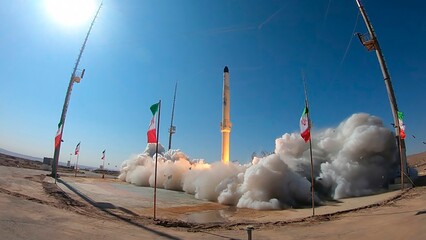 Iran completes satellite-carrying rocket test launch
 - NextVideo Duration 02 minutes 32 seconds02:32Greece droughts: Govt planning to build more dams
- Video Duration 02 minutes 40 seconds02:40
 UK prime minister in Washington DC: Leaders mull Kyiv’s plea to use long-range missiles
 - Video Duration 02 minutes 14 seconds02:14
 Flooded Nigerian city: Infrastructure damage hampering rescue efforts
‘Peaceful’ aerospace activities
Iran has been advancing its aerospace activities, insisting they are peaceful and in accordance with United Nations Security Council resolutions. But it has also faced several setbacks with several of its satellites exploding during launch.
In January, Iranian media reported that the Sorayya satellite had been launched into a 750km (465-mile) orbit, the highest by the country so far.
In February, Russia put into orbit an Iranian remote sensing and imaging satellite, drawing condemnation from the United States.
At the time, Iran’s telecommunications minister said Iran had carried out a dozen satellite launches over the previous two years.
Iran has faced crippling Western sanctions for years, especially after the US, under then-President Donald Trump, unilaterally abandoned a landmark nuclear deal between Tehran and major powers in 2018.
Source: Al Jazeera and news agencies
ll Jazeera Media Network
 Who Watches the Watchers?