
 Posted by
 https://rehab.ie › 2024/08 › Rehab-PBS-2025-Final
Relevant Extracts
Rehab Group is an independent voluntary organisation that has been providing services to adults and children with disabilities for more than 70 years. We are a campaigning organisation that advocates for the 12,500 people who currently use our services and their families.
Our purpose is to empower those we support to lead more independent lives and play an active and meaningful role in their communities by providing high-quality, flexible, and sustainable care services, learning, training and education, and employment skills and opportunities.
We are a rights-based and inclusion-focused organisation comprising three divisions: RehabCare, National Learning Network and Employability and Social Enterprise
….

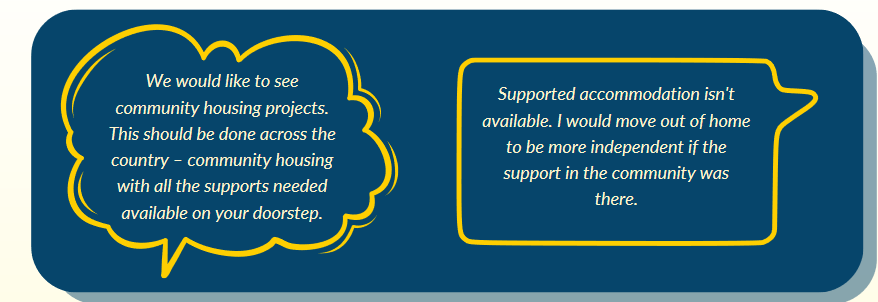
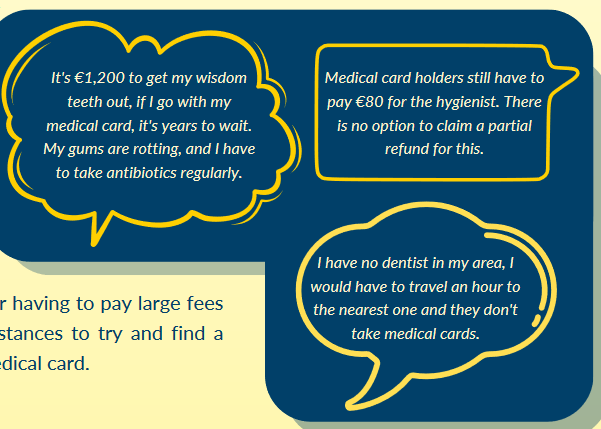

The right of persons with a disability to work on an equal basis with others is enshrined in international, EU and national policies, including the UN Convention on the Rights of Persons with Disabilities, the
European Union Pillar of Social Rights and the 2020 Programme for Government, Our Shared Future. However, while the need to build bridges to employment in the open labour market for persons with disabilities has been clearly identified, significant obstacles remain in developing pathways to
their employment.
The employment rate in Ireland for people with disabilities at 32%, is the lowest in the EU and compares poorly with the EU average of 51%: At the same time, the disability employment gap is the highest. The EU average gap between the employment rate of persons with disabilities and others stands at 24%, while in Ireland, it stands at 44%. Source: European Disability Forum (2023) European Human Rights Report Issue 7. As the largest non-governmental employer of disabled people through Rehab Enterprises and the largest provider of Specialist Training Provision (STP) for disabled people through NLN, Rehab has considerable expertise and experience in employment activation programmes for people with disabilities and in placing people in employment/work experience placements….
Assistive Technology (AT) is an umbrella term for assistive products, equipment and systems that enhance learning, working and daily living for persons with disabilities. Assistive technologies promote participation and inclusion in society and support access to health, social services, education, work and other important life experiences for persons with disabilities. Assistive products can enhance a person’s functioning related to cognition, communication, hearing, vision, mobility and self-care. It promotes the inclusion, participation and engagement of people with disabilities and enables them to participate in working and community life on an equal footing with others. AT plays a pivotal role in ensuring that people with disabilities have access to independent living, education and employment and can live the life of their choosing. As such, access to AT is a human rights issue and central to the realisation of the UNCRPD.
The assistive technology sector is changing rapidly due to technological advances and evolving
needs. Investment in developing the AT ecosystem is required to ensure that assistive products
are appropriate, affordable, safe, effective, acceptable and accessible to those who need them
most. While the Digital and Assistive Technology (DAT) Fund introduced in 2022 represented a
good start, much more investment is needed.
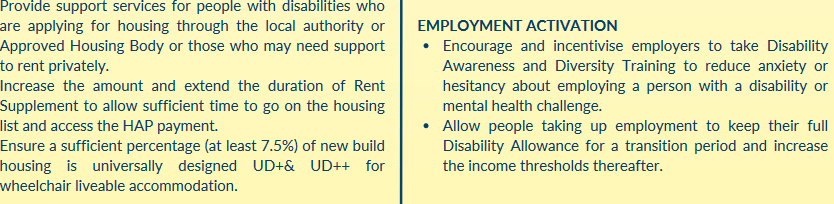
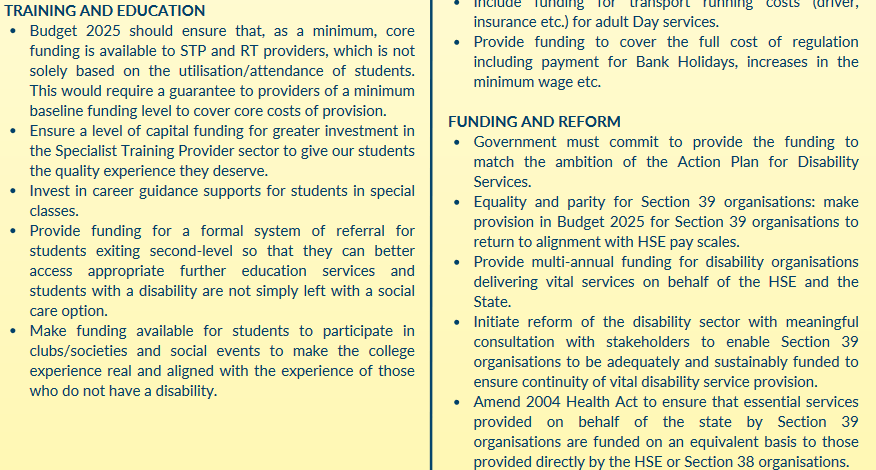
Summary of Recommendations


============
Budget 2025 provides an opportunity to invest in practical measures that will help to alleviate chronic prison overcrowding. It also provides an opportunity to invest in key supports to improve the lives of people in prison, people leaving prison, and their families.4 Sept 2024
https://www.iprt.ie › latest-news › iprt-pre-budget-subm…
Extracts from submission for 2025 Budget
….This submission is written against the backdrop of unprecedented prison overcrowding. The highest-ever prison population in the history of the state was recorded in late June 2024, when the number of people in custody surpassed 5,000; this record has been frequently beaten since.
IPRT believes that prison expansion not only contradicts existing government policy, but the lengthy process of prison building will not offer any short-term solution to hundreds of men and women currently sleeping on prison floors and thousands more who are sharing cells. If financial resources and political will are not invested in supporting and championing effective alternatives to prison, the resources needed to continually increase the prison estate will be a financial and social drain on the State for decades to come.
…..

Respond to mental health and addiction (must be a priority)
Resource and implement recommendations made by the government-appointed High Level Task Force to consider the mental health and addiction challenges of those who come into contact with the criminal justice sector. This should include enhanced resourcing of the prison psychology service, expansion of the Prison In-Reach Court Liaison Service, and the resourcing of addiction counselling and other support services to facilitate the roll-out of a pilot dual diagnosis programme in prison.
Chat GBT AI
Prisons in Ireland are managed by the Irish Prison Service, which is responsible for the secure custody and rehabilitation of offenders. The prison system in Ireland includes a mix of closed and open facilities, catering to different types of offenders.
If you have specific questions about prisons in Ireland, such as their conditions, programs, or statistics, feel free to ask!
It looks like you might be asking about mental illness. Mental health is an important aspect of overall well-being, and it encompasses a wide range of conditions that affect mood, thinking, and behavior.
In Ireland, there are various resources and services available for individuals dealing with mental health issues, including support from healthcare professionals, community organizations, and helplines. If you have specific questions or need information about mental health resources, feel free to ask!
What do you think? Too glib or more data needed
 Who Watches the Watchers?