
 Posted by
 Updated / Monday, 16 Dec 2024 11:28
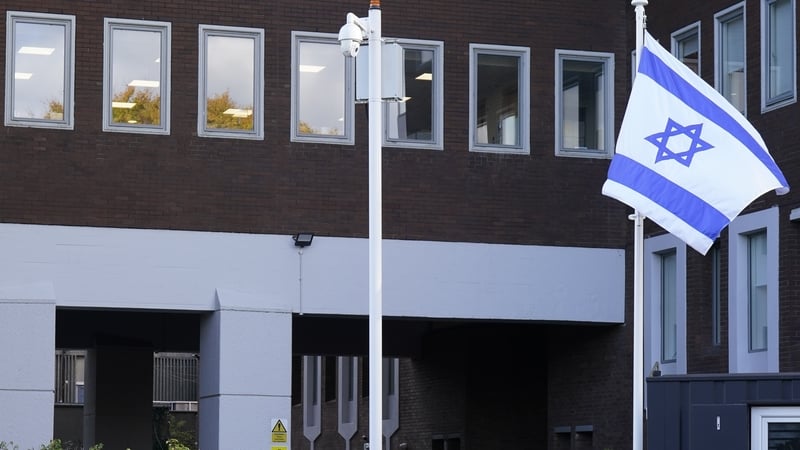
The chairperson of the Jewish Representative Council of Ireland has said he is “deeply concerned” by the deterioration in relations between Ireland and Israel following Israel’s decision yesterday to close its embassy in Ireland.
Maurice Cohen said the Irish Government’s intervention in the International Court of Justice case which accuses Israel of genocide risks “oversimplifying a highly complex and tragic conflict, unfairly isolating Israel, and undermining the integrity of the term ‘genocide'”.
Israeli Foreign Minister Gideon Saar announced yesterday that Israel will close its embassy in Dublin in light of what he called “the extreme anti-Israel policies of the Irish government”.
Mr Cohen said that the closure of the embassy in Ireland is “particularly distressing for the Jewish community in Ireland”.
“For these individuals, the closure of the embassy represents not only a symbolic blow but also a practical disadvantage.
“Consular services provided by the embassy are vital for those maintaining connections with family, culture, and heritage in Israel. Losing this resource will leave many feeling unsupported and aggrieved.
“Closing the embassy risks alienating a significant segment of Irish society and sends a message that dialogue is being replaced by disengagement,” he said.
He added that the Jewish Representative Council of Ireland reaffirms its commitment to peace and the protection of innocent lives “on all sides of the Israeli-Palestinian conflict”, while also supporting Israel’s right to defend itself from “terrorism and existential threats”.
Mr Cohen called on both the Irish and Israeli governments to seek pathways to rebuild trust and to ensure avenues for diplomatic engagement remain open.
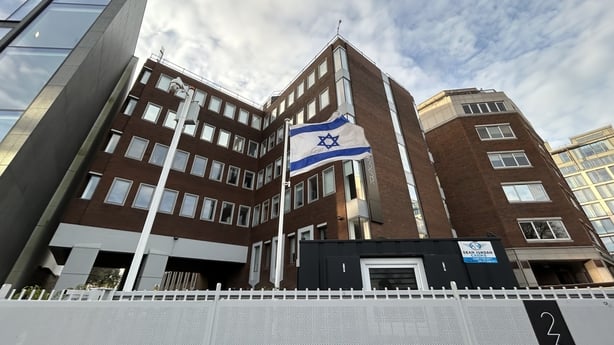
Martin says Irish position motivated by respect for humanitarian law
Tánaiste Micheal Martin has said Ireland’s position towards Israel has not been motivated by anything other than respect for international humanitarian law and respect for human rights.
He was responding to comments by Ireland’s Chief Rabbi Yoni Wieder, who said “many Israelis living here feel that Ireland is incredibly hostile towards Israel”.
Speaking on his arrival at a meeting of EU foreign ministers in Brussels, Mr Martin said: “Any action that the Irish Government has taken in respect to the Middle Eastern issues, and particularly in terms of the war in Gaza, has not been motivated in anything other than respect for international humanitarian law, respect for human rights.
“We have consistently called for an immediate ceasefire, release of all hostages, and a massive surge of humanitarian aid.”
The Tánaiste said Ireland’s decision – alongside Norway and Spain – of recognising the State of Palestine was “not a hostile act” and should not be seen as one.
He told reporters: “The utilisation of the international courts by Ireland, such as the ICJ or indeed the ICC, where we have supported those courts, where there can be international accountability for war crimes in any part of the world, including in Gaza, should not be seen as a hostile act.
“Ireland stands by the approach it has taken, which has been motivated, as I have said, towards full accountability for what is happening in Gaza and for respect for international humanitarian law and human rights. That applies to Hamas, that has applied to Hezbollah and to the Israeli Government as well.”
Asked how Ireland might rebuild diplomatic relations with Israel, Mr Martin said the first step was for the war in Gaza to end.
“We believe passionately that there’s an alternative route now. And we would say to Israel and to all concerned, to open up Gaza to the international community, to allow the international community in, to allow the media in, to bear witness to what is happening,” Mr Martin said.
Yesterday, Taoiseach Simon Harris described the move by Israel to close the embassy as a “deeply regrettable decision” from the government of Israeli Prime Minister Benjamin Netanyahu.
In a statement on X, Mr Harris said that he utterly rejected the assertion that Ireland is anti-Israel.
“Ireland is pro-peace, pro-human rights and pro-International law,” Mr Harris said.
Tánaiste Micheál Martin said there are “no plans to close Ireland’s embassy in Israel” despite the development.
“I believe firmly in the importance of maintaining diplomatic channels of communication and regret that this decision has been taken,” he said.
Meanwhile, Taoiseach Simon Harris said he will continue to shine a light on what is happening in the Middle East and that nothing should distract from that.
“I’m extremely proud of the position of Ireland, and I don’t just mean the Irish government, I mean the people of Ireland in speaking up and speaking out against the atrocities,” Mr Harris said.
He said he did not want to minimise the decision to close the embassy but it was nothing compared to what was happening in the Middle East.
On Wednesday, Tánaiste Micheál Martin secured Government approval for Ireland to intervene in South Africa’s case against Israel.
The case was initiated following the launch of military operations in Gaza after the 7 October 2023 attack.
It concerns breaches of the Convention on the Prevention and Punishment of the Crime of Genocide in Gaza.
By filing a declaration of intervention, Ireland is not joining either side in the case.
Israeli opposition leader Yair Lapid criticised his government’s decision to close the embassy in Dublin.
In a statement on X, he said: “The way to deal with criticism is not to run away, but to stay and fight!”.
He claimed the decision was “… a victory for anti-Semitism and anti-Israeli organisation”.
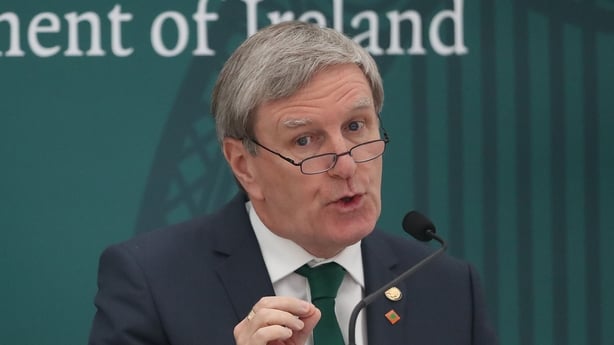
‘Bad day for diplomacy’
The former Ireland ambassador to US, UK, Germany and Malaysia has described the closure of Israel’s embassy in Ireland as “a bad day for diplomacy”.
Speaking on RTÉ’s Morning Ireland, Dan Mulhall said in his experience diplomacy is not about agreeing with people but it is about getting around your disagreements.
“It’s so unfortunate that there won’t be an Israeli presence in Dublin from now on to talk to the Irish media, the Irish people and the Irish Government about Israel’s point of view and trying to bridge the gaps that are there between our two countries,” he said.
However, he said it does not mean it is a permanent decision.
“There will continue to be an Israeli presence, I’m sure. In Dublin, some kind of part of a consulate here and they’ll probably accredit an ambassador from somewhere else, maybe London, to cover Ireland,” Mr Mulhall added.
“But it still means that there’s a reduction in the level of contact between Ireland and Israel, which is not a good thing between two countries like ours.”
In relation to any impact this may have on Ireland’s relationship with the United States, Mr Mulhall said “it’s a complicating factor, no doubt”.
 Who Watches the Watchers?