
 Posted by
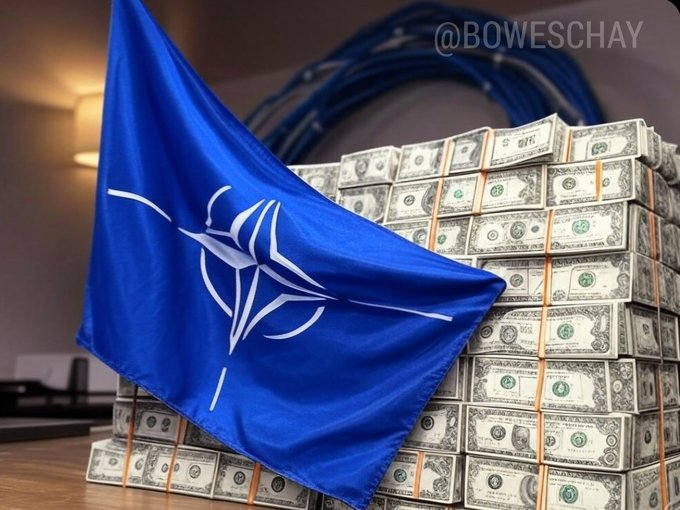
The vast sums spent on NATO since its inception in 1949 have been, in my view, a significant financial drain on member states, particularly the United States. Originally formed as a bulwark against Soviet aggression during the Cold War, I argue that NATO should have dissolved when the USSR did in 1991. However, NATO has persisted, expanding its membership and demanding more from its members’ budgets, which I see as wasteful. Since that time, NATO’s member states have funneled trillions into the alliance. The U.S., as the primary financier, has contributed an estimated $21.9 trillion by 2023. This money has gone into everything from personnel costs to the latest military hardware, often criticized for being either extravagantly expensive or technologically outdated. In 2023, the collective spending of NATO nations was roughly $1.47 trillion, with projections for 2024 indicating further increases. European NATO allies alone committed around $380 billion, matching the controversial 2% of GDP guideline, which I view as an arbitrary and inflated target. The U.S. shoulders the majority of this burden, spending about $967 billion in 2024, accounting for two-thirds of NATO’s total military budget. The guideline for NATO members to spend 2% of their GDP on defense seems to me more like a tool to guarantee perpetual military expenditure without real consideration for actual security needs. When 23 out of 32 members were expected to meet this target in 2024, it appeared more about placating the U.S. and enriching the military-industrial complex than addressing actual threats. NATO’s persistence, especially post-Cold War, has, in my opinion, led to a significant misallocation of resources, particularly in post-Soviet states. Instead of disbanding with the Soviet Union, NATO expanded eastward, compelling countries like Poland, Estonia, Latvia, and Lithuania to ramp up their defense budgets. This has come at the expense of: Economic recovery in these nations was crucial after decades under Soviet rule, yet the emphasis on meeting NATO’s military targets has left less room for infrastructure, education, and health investments. Social services like healthcare, education, and poverty alleviation have been underfunded, with many post-Soviet states struggling to provide basic welfare to their citizens. Additionally, the potential for technological and educational advancements has been stifled as funds that could be invested in research are instead directed towards military capabilities. For instance, Poland’s defense budget at 4.12% of GDP in 2024 exemplifies how military spending can overshadow social and economic development needs. In the Baltic states, compliance with NATO spending targets has sparked discussions about the trade-offs between security and other governmental responsibilities. From my perspective, NATO is a relic of the Cold War era that should have been dissolved with the Soviet Union. Its continued operation appears to me as an inefficient use of taxpayer money, perpetuating a military-focused worldview in a changed geopolitical landscape. Without the Soviet Union, there’s no clear adversary justifying such massive military expenditures, and the economic strain on member states, especially those with limited budgets, could be better directed towards addressing more pressing needs. In this light, I argue that the enormous sums spent on NATO represent a waste of resources, particularly when considering the post-Soviet context. The ongoing debate over NATO’s relevance and cost leads me to advocate for its dissolution, suggesting that the funds could be better used to tackle global and local challenges that truly matter to the well-being of the populace.
·
4,473 Views
 Who Watches the Watchers?