
 Posted by
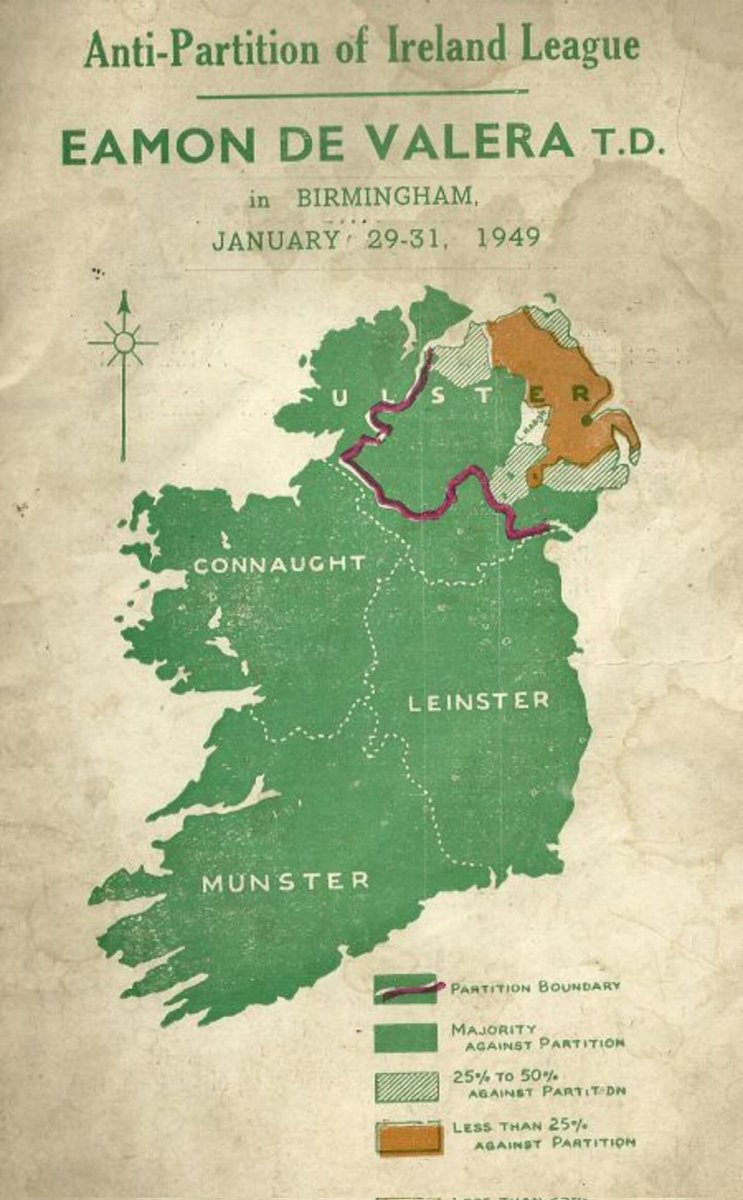
Today, in 1921, the greatest tragedy in our modern history occurred. The Partition of this island. The Government of Ireland Act came into effect, carving us into two jurisdictions, Northern and Southern, each with its own parliament and administration, its own uneasy claim to legitimacy. This was no sudden act of surgical precision. The idea of Home Rule had been festering in British politics for over three decades. The First Home Rule Bill was proposed in 1886, only to be torpedoed by Ulster unionists who saw it as a road to Rome, not to freedom. They feared domination by a Catholic-majority parliament in Dublin, a fear that would shape every compromise and conflict to follow. The 1920 Act, often called the Fourth Home Rule Bill, was Westminster’s latest attempt to placate both Irish nationalist aspirations and Protestant unionist anxieties. The solution? Two parliaments: one in Belfast, for the six northeastern counties of Ulster, and one in Dublin for the rest of the island. A Council of Ireland was created as a constitutional fig leaf, promising future unity with “a view to the eventual establishment of a Parliament for the whole of Ireland.” But even at the time, few took that promise seriously. Superficially, little changed. Both entities remained within the United Kingdom. Southern Ireland’s parliament never functioned properly, boycotted by most Nationalists and ignored amid the fire and fury of the War of Independence. Only in December 1922, with the birth of the Irish Free State, did the constitutional map shift. On the 8th of December Northern Ireland, just days old legally, formally opted out of the new dominion, reasserting its place within the UK. The border, once theoretical, became real. Partition was a bitter compromise. Resisted in Dublin and Belfast alike for very different reasons. Éamonn de Valera, speaking in the Dáil in August 1921, made clear that unity by conquest was not the Republican way: “They would be making the same mistake with that section as England had made with Ireland… For his part, if the Republic were recognised, he would be in favour of giving each county power to vote itself out of the Republic if it so wished.” Even the most ardent advocate for a united Ireland knew that force couldn’t be the answer. And yet, what followed was not peace, but a century of tension, conflict, inequality, and cold borders. The legacy of the 3rd of May 1921 still reverberates, from the smoke and blood of The Troubles to the cautious hope of the Good Friday Agreement, which revived the same questions first posed by that Fourth Home Rule Bill. With courage and vision, we will be a 32 county nation once again.
·
24.3K Views
 Who Watches the Watchers?