
 Posted by
 UP DATED BY WATCHERS MAY 2025.
At 7:30 am on 9th June 1925, a timber carter strolling past the Ticknock crossroads outside Dublin spotted a young, brown haired woman lying on the ground. She was dressed in a respectable manner – a mid-calf length grey tweed suit, mauve silk blouse, silk stockings, a black hat and black leather patent shoes. When he espied one of her shoes some distance from her body, he went to rouse the girl. It was then that he noticed blood still oozing from her chest and realised the woman was dead. He ran a quarter of a mile to Lamb Doyle’s, the only pub in the area, and rang the Civic Guards.
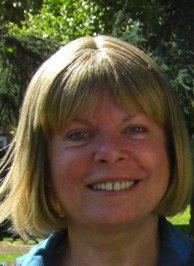
The victim was Elizabeth ‘Lily’ O’Neill, otherwise known as ‘Honour Bright’. The youngest child of a County Carlow blacksmith, she was born in 1900 but orphaned by the age of eight. She was then raised by her five older siblings, four of whom subsequently emigrated to the USA.
In 1918, Lily moved to Dublin to work as a sales assistant in a respectable ladies outfitter on Kildare Street. Her wages were low but she was given clothes and accommodation in a woman’s lodging house at 48 Newmarket Street in the Coombe. For reasons unclear, she adopted the pseudonym Honor Bright’ for the previous four years. One of her housemates was Madge ‘Bridie’ Hopkins, her future best friend, who was about to embark upon an affair with Dr. Patrick Purcell, a married father of two who was working as a doctor in Blessington, County Wicklow.
Lily also earned some extra money working as a dancer in an unidentified evening club where men paid for the pleasure of each dance. Patricia Hughes believes that one of the men who frequented this club W. B. Yeats, who was about to become a Senator of the Irish Free State. She maintains that the promiscuous poet subsequently embarked upon a seven-year affair with Lily, despite his marriage of 1917 to Georgie Hyde-Lees. Hughes discerns a veritable confession to this affair in Yeats poems, particularly in “Michael Robartes and the Dancer” and “A Man Young and Old” which, she says, provide ‘substantial detail’ on how and where he met Lily, as well as his delight at her bearing him a son.
Lily’s son was born in Dublin on 9 November 1920 and named Kevin Barry after the young Carlow patriot who was hanged in Mountjoy Gaol eight days earlier. No father was named on his birth certificate and the boy took on her family surname, O’Neill.
About a year after his birth, Lily relocated to a semi-derelict tenement home on nearby Catherine Street where she befriended Margaret Magill and James White. The couple later became foster parents to young Kevin, raising him alongside White’s own son.
On 22 August 1921, less than 10 months after Kevin’s birth, WB Yeats and his wife George had a boy called Michael.
In 1923, Yeats was awarded the Nobel Prize for Literature. Hughes believes that the award coincided with growing pressure from Lily to have Yeats recognise Kevin as not just his son but also as his firstborn son and heir.
Hughes reasons that Lily and her son became a tremendous threat to Yeats’ reputation as ‘a thoughtful, honest, imaginative man who was trustworthy, reliable, impartial and concerned for the whole of society’. This apparently led George Yeats to approach Kevin O’Higgins, the Minister of Justice, although no record of such a meeting survives.
According to Hughes, O’Higgins then united with Eoin O’Duffy, the right-wing Commissioner of the Garda Síochána, and David Neligan, the head of the Special Detective Unit (aka the Special Branch) within the newly formed Garda Síochána. Together they allegedly plotted the best way to put the squeeze on Lily to give up her sons’ claims to Yeats’ inheritance.
Two days after Lily’s murder, Leo Dillon, the 25-year-old superintendant of the Dunlavin police station in County Wicklow, confessed to the murder. Within 24 hours, the authorities had also rounded up Dr. Purcell, the lover of Lily’s housemate Bridie Hopkins.
During their trial at the Central Criminal Court in Green Street in February 1926, the jury learned how, on the eve of Lily’s murder, Dillon and Purcell had united at a summer fete in Blessington on 8th June, the hottest day of the year. They then made their way via Naas to Dublin in the doctor’s grey two-seater ‘Swift’ sports car. After an evening of much drink, they apparently arranged for a double date with Bridie and Lily, aka Honour Bright, uniting with them outside the Shelbourne Hotel on Stephen’s Green shortly after midnight. Drunk on whiskey, Purcell became violent, shouting about the theft of £11 and a silver cigarette case by a bobbed haired girl dressed in grey. He apparently showed his revolver to Bridie, remaking ‘I always carry a revolver with me and I could blow you all off the Green if I wished.’
At about this time, Lily hailed a taxi and went home. However, it was alleged that Purcell and Dillon followed her and then either persuaded or man-handled her into their car, before making their way towards Ticknock.
It is not clear what happened next but Dr. Purcell arrived back at his home at 4:25am, clambered through his study window, ate a sandwich, drank some milk and slipped back into his wife’s bedroom.
The following morning Lily was found dead. Her heart had been pierced by a bullet fired from a small Browning pistol from a distance of between 6 and 10 feet which struck her on the right breast, ‘close to the nipple’, leaving just a trace of blood. Death was instantaneous.
Within 24 hours the coroner J. P. Brennan opened the inquest, advising a rapidly growing crowd that the deceased was ‘a decent, innocent victim of a heinous crime’ aged about 26 years, that her clothes were undisturbed and that she had been killed instantly by a bullet at about 3am.
However, the story took a dramatic twist that afternoon with the unexpected arrival of Commissioner O’Duffy who ordered Brennan to adjourn the inquest for three weeks. Brennan and Superintendent John Reynolds, the principal investigation, were then informed that their services were no longer required and that O’Duffy would personally look after this case.
One day later, Leo Dillon, a physically imposing policeman and a veteran of the Great War, apparently confessed to the crime. Purcell was arrested on June 12th.
O’Duffy then assigned the case to Chief Superintendant David Neligan who had made his name working as a spy in Dublin Castle for Michael Collins during the War of Independence.
Hughes maintains that Dillon was acting under orders from O’Duffy and Neligan who were themselves answerable to O’Higgins. And at the top of this hierarchy was George Yeats, desperate to stop a working class Catholic republican woman claiming that WB Yeats, a pro-Treaty, Nobel-Prize winning Senator of Unionist persuasion, fathered her love child. O’Higgins then orchestrated a formidable cover up, involving 7 months of interviews, statement taking and falsifying evidence.
There is not room here to go into the minutiae of Hughes argument but it is certainly intriguing and plausible, albeit with much conjecture and cryptic interpretation of Yeats poetry.
What cannot be denied is that by the time of the four-day trial in February 1926, Dillon had changed his story and pleaded ‘not guilty’. The jury agreed, obliging the judge to discharge both Dillon and Purcell.
If anyone was found guilty it was the late Lily O’Neill who was, as the prosecutor put it, cast as ‘one of those unhappy creatures who … was compelled to seek her living on the streets at night.’ Hughes believes the ‘reconstitution’ of her grandmother as a prostitute was part of a deliberate plan to devalue and belittle the deceased so that public sympathy would wane, particularly in the newly formed Irish free State where prostitution was seen as a legacy of the British colonial period as well as something morally repugnant to all Catholics. The conceit was that because she was a prostitute, she got what she deserved.
Hughes believes that Lily’s allies, including Bridie Hopkins, were ‘coerced into silence’. She notes huge gaps in the prosecutions case, including the failure to interview either the original Coroner or the man who found Lily’s body. Much key evidence was also omitted, including the photographs that show the body of Hughes’ grandmother, respectably clad, lying on the roadside. On the other hand, new “details” appear to have been added such as claims that Lily’s possessions at the time of her death included ‘a Malthusian sheath’ (or condom) and that a semen-stained handkerchief was found in her hand.
Kevin O’Neill only discovered his mothers’ identity when he joined the British Army in 1942 and was asked to find his birth certificate to prove his age. He passed away in 1980, aged 59.
Hughes believes the case of Honour Bright explains why Yeats was absent from the public spotlight from the time he spoke about the Divorce Bill on 11 June 1925, two days after her murder, until 8 February 1926, four days after the trial ended, when he attended the opening night of Sean O’Casey’s play ‘The Plough and the Stars’ which culminated in a riot at the Abbey.
For anyone interested in reading more, see ‘Who Killed Honor Bright?’ by Patricia Hughes, available from www.printondemand-worldwide.com
The Irish Senate only opened in Dec 1922 and Yeats was a Govt-nominated member from then – so, while neither in 1918 or 1919 [ if WBY met Lily then ], nor at the time when she gave birth to Kevin in Nov 1920, was he *about to become a Senator*, but he was already long a noted public figure and an internationally-recognized major poet. And in 1925 a major Establishment figure and politically very well-connected. The claim made by Patricia L. Hughes in her 3rd edition, May 2015, Footnote 43, p 218 is absolutely crucial – that Yeats told both [a] his NY agent John Quinn on Oct 30, 1920, 10 days before the birth of Lily’s son, Kevin, and also [b] his fellow Senator, Dr Gogarty – his long-time younger friend whose own sexual history was *colourful* – about both (i) his affair with Lily and (ii) her pregnancy, and (iii) asked for their help. If that claim – based on p 663 in Allen Wade’s 1955 *The Letters of W B Yeats* [ which I have not seen ] – is really valid, then all the circumstantial evidence, including references in many of his poems, merely confirms what is beyond reasonable doubt.
Patricia L. Hughes’s Followers (70)
August 2012
My dad, a Dubliner, was illegitimate and didn’t know who his father was.
Suddenly I realised that he was the son of William Butler Yeats and started to find out about my grandmother, who was murdered when he was four.
 Who Watches the Watchers?