
 Posted by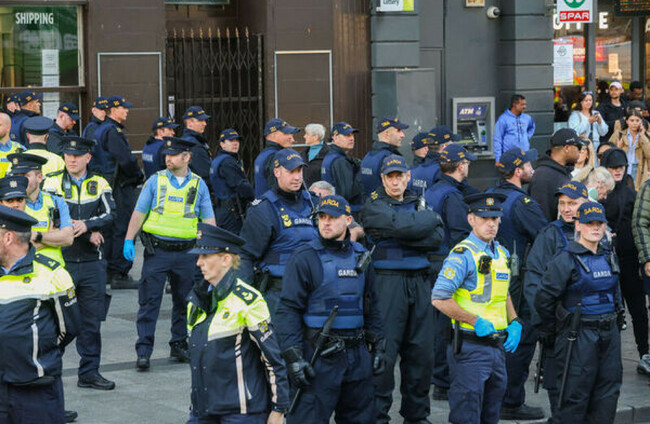
Gardaí on duty in Dublin city centre at a protest. Rollingnews.ie
stones in their shoes
Gardaí are ‘unfairly’ targeting Drew Harris for blame over recent changes, says oversight chief
Recently Dr Elaine Byrne sat down with The Journal to discuss policing in Ireland and explain her role in the new policing oversight body.
9.01pm, 25 May 2025
8.4k
23
THE HEAD OF a garda oversight body said she believes that Drew Harris has been “unfairly targeted” for blame by gardaí for implementing a Government change programme.
Recently Dr Elaine Byrne sat down with The Journal to discuss policing in Ireland and explain the role her new agency, the Policing and Community Safety Authority (PCSA), plays.
Byrne believes frustrations, change fatigue and “stones in their shoes” problems are causing trouble in garda ranks.
It has been a bruising few years for Harris and the garda management team, underlined by the number of flashpoints between them and representative bodies.
These issues included a dispute around shift rosters and also an ongoing perception of overbearing discipline linked to administrative tasks.
Gardaí who responded to a survey by the Garda Representative Association (GRA) voted 98.7% in favour of a vote of no confidence in Commissioner Drew Harris.
The GRA in recent weeks refused to invite Harris to its annual delegate conference which prompted new Justice Minister Jim O’Callaghan to also avoid attending. Again industrial relations between Garda Headquarters and rank and file gardaí are at a low ebb.
Byrne believes the disquiet about Harris is from a so-called “change fatigue” among serving members of the force.
“One thing that the guards don’t get enough credit for is the extraordinary amount of change that has happened in a very short period of time. It is the most momentous period of change in the history of the guards,” she said.
Byrne explained this includes a major redrawing of garda divisions, a new operating model and the introduction of new legislation that governs the organisation.
She also said that there are now new focuses, including upskilling in technology and a greater emphasis on civilianisation, all adding to the daily challenges for gardaí.
When asked to clarify if she thought the change model was directly affecting the garda relationship with Drew Harris she again repeated that the reform programme was difficult.
“I think there’s a lot of change happening at the same time. We have every year, when we go out and listen, we produce this report called What We Heard, and one of the things that we’ve heard is change fatigue,” she said.
Byrne said it is not Drew Harris who is responsible for the new operating model and reform programme but rather it was handed to him by Government.
“It is a government initiative that he has been tasked with implementing, I think that he individually is unfairly the target of all of the ills within the guards,” she said.
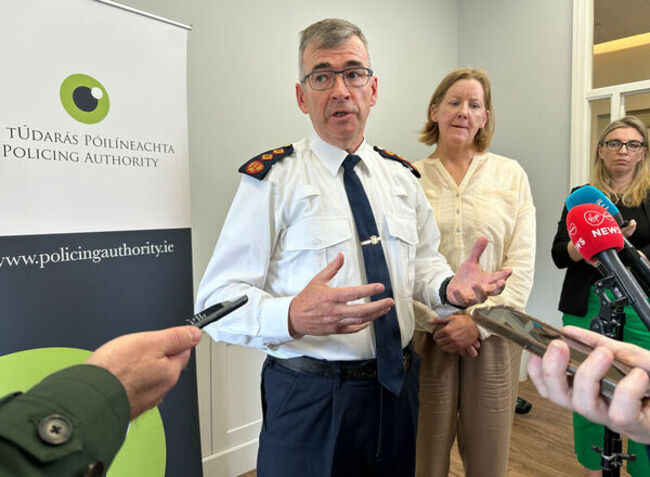
‘Not standing on the sidelines’
When we met Byrne, it had been a tough few days for An Garda Síochána – the death and funeral of Garda Kevin Flatley was weighing heavy on her. Byrne herself was dealing with the emotional toll – fighting back tears as she described signing the book of condolence in a local garda station with her daughters.
The practising barrister, who was also a newspaper opinion writer and advocate for governance and accountability, joined the then Policing Authority in 2021 and would ultimately assume chair of the body in 2024 from former head of RTÉ Bob Collins.
“I felt it was very easy to be standing on the sidelines and telling people who are on the pitch what to do. So when the opportunity came to be be more involved in the future of policing in Ireland I was very excited about that,” she said.
The Policing Authority is no more and it is now the PCSA which also carries the functions of the subsumed Garda Inspectorate into its ranks.
Advertisement
The body meets senior garda management once a month to discuss issues.
One issue constantly cropping up is the problem of overbearing bureaucracy and the relationship between gardaí, their representative bodies and Drew Harris.
She has also identified from talking to guards that there are massive issues around resourcing – not enough officers, not enough cars available to respond to calls, for example. She also said there is a lack of interagency work especially around mental health calls and frustrations from gardaí being sent out on non-crime related calls.
She said that concerns over a complete redesign of the policing model may be “mismatched”. She said she has faith in the model and that when she and her colleagues dig into issues they find that they are problems that are not associated with the reform but rather are issues because of geography and resourcing.
“When I meet gardaí, they are proud to be guards – they love being a guard. It’s a badge of honor being a guard.
“And then there are just what I would call these small stones in your shoe. And if every day, the stone is in your shoe, then it’s just becoming more and more frustrating,” she explained.
Byrne said she is constantly meeting gardaí, including recently as she was at mass, who are raising their concerns with her.
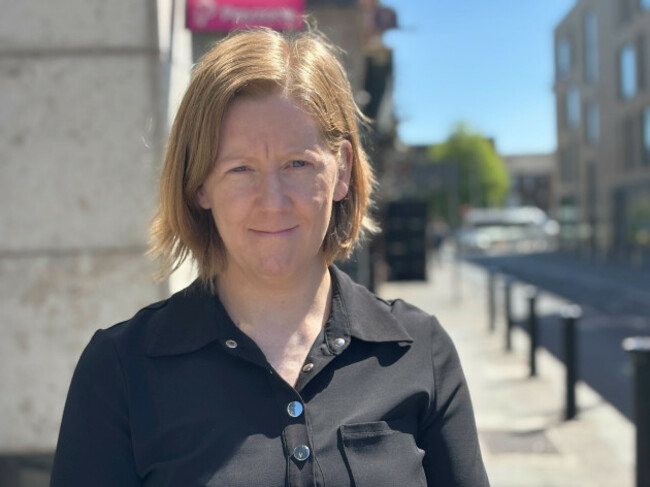
Suspensions
When not sitting on the PCSA committee, Byrne often finds herself in the Workplace Relations Commission where she acts as a barrister defending and advocating for people in employment disputes.
In recent years, concerns have been raised about the problem of garda suspensions.
An embarrassing case in which a garda was suspended and then cleared over giving a bicycle to an elderly man led to significant criticism of garda management.
There has also been a number of cases before the High Court and the Workplace Relations Commission in which internal discipline mechanisms were found to be improper.
The high point of suspensions was in 2021/2022 when there were 44 and last year it had fallen to 18. To date in 2025 there have been six.
She said there has to be a “robust way of investigating” allegations of wrongdoing but said since the highpoint of suspensions in 2022 “things have got a little more sophisticated”. Byrne said that everyone is entitled to fairness.
“Just because you are accused doesn’t mean you did anything wrong,” she added.
“It is important that there is a disciplinary system that’s efficient, effective and fair.
“There have been occasions where the disciplinary system has been analysed in High Court judgments and the processes of the guards have not always been ones that have passed mustard.
“Really it’s not fair to those members, and it’s not fair that those under investigation are left hanging for an amount of time that’s disproportionate,” she added.
At present the PCSA is asking the public to contact it to tell its members what they should prioritise when being watchdog to their police force.
Byrne and her colleagues have been consulted by the Department of Justice as the campaign begins to find the new Garda Commissioner. The power to select the new “number one” will be for the Government.
Drew Harris’s term will come to an end in September.
 Who Watches the Watchers?