
 Posted by
 18/08/2025
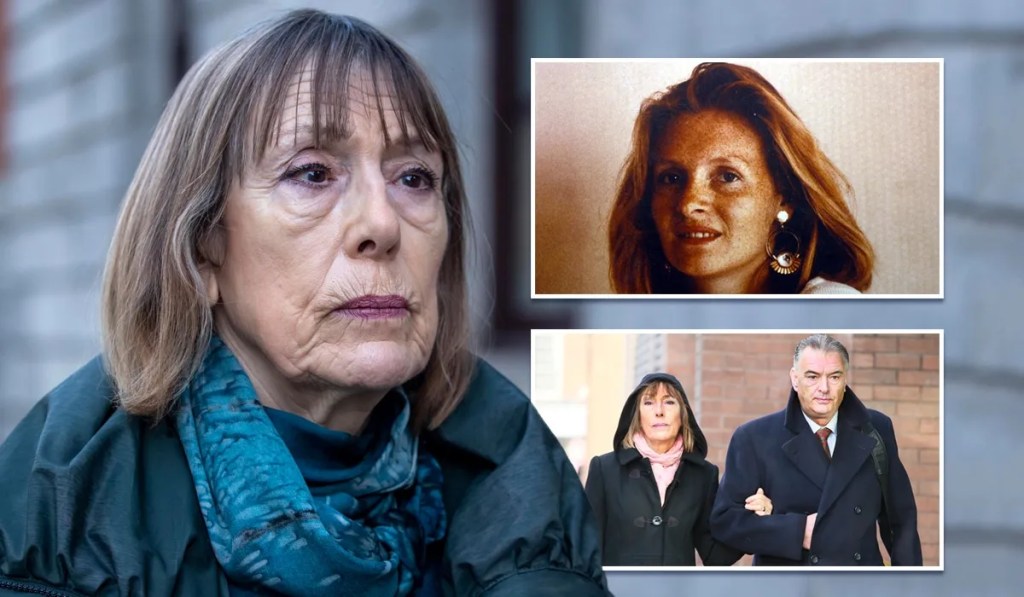
Jules Thomas – former partner of the late Ian Bailey – said yesterday she is praying cold-case investigators collecting DNA in a bid to solve the murder of Sophie Toscan du Plantier make a breakthrough so ‘the truth will come out’ and clear her ex’s name.
A review into the brutal killing of the 39-year-old French filmmaker could now be completed within weeks due to enhanced forensic DNA collection techniques. Ms Thomas firmly believes her former lover ‘did not commit this appalling murder but he was not believed’.
She said: ‘That wrecked his life and hastened his death.’
Selling art from her stall at the weekly Sunday market in Schull, West Cork, Ms Thomas said she is ‘praying for closure.
People still give me lingering looks of suspicion, even some of those I’ve known for decades locally and visitors who recognise me looking in a ghastly, lingering way sometimes.
‘This shadow of suspicion has never really lifted. Some around here remain convinced Ian murdered Sophie, and I was also involved, covering up for him. Now the truth will come out hopefully, and there can be closure at last.’
Ms Thomas, who split from Mr Bailey after three decades, added: ‘Good luck to those solving the case with that new DNA analysis. It would still be wonderful to have his name cleared posthumously. It would also bring some peace to Sophie’s poor family, who were duped and strung along for years in the belief that Ian Bailey was the murderer.’
Cork solicitor Frank Buttimer, who represented Mr Bailey for more than 20 years, including during two court cases taken against the State and various newspapers, said his client had voluntarily given his DNA to Gardaí.
‘Mr Bailey is deceased and is not around to clear his name,’ he said on RTÉ Radio. Asked whether it should be made public if Mr Bailey’s DNA is found on items, Mr Buttimer added: ‘I am sure in certain quarters there would be a rush to provide such information; there is an ongoing belief in a certain section of the police of a connection between Mr Bailey and the crime which he has denied throughout his life.
‘There has always been a rush to put Mr Bailey’s name out there in certain quarters as being the one connected with the offence. In Irish law, there’s the presumption of innocence; he was presumed innocent by the State of Ireland, he was never prosecuted here, but a completely spurious case was taken against him in France, where he was found guilty, but that was a predictable event.’
He said he hoped that if his late client was proven innocent, the French authorities would reflect on the fact he had been ‘hounded and pursued for this dreadful crime until the time of his death’.
He said this had ‘destroyed his life’, adding: ‘Every avenue should be pursued to get to the truth of this appalling crime. It’s a stain on us and a stain on our police and on our system, and if anything can be done even at this late stage I would welcome it.’
Former UK forensics detective Bridget Chappuis, who spent decades investigating murders, has had ongoing contact with the family of Ms du Plantier, and also with Ms Thomas and Mr Buttimer. She spoke with Mr Bailey regularly in the last months of his life, and he gave her boxes of documents.
The highly respected expert has always believed Mr Bailey was innocent, having looked into all aspects of the case.
‘Who’s to say there was no cross-contamination of the exhibits, how they were stored and having surety there was no interference with it over the years,’ she told Extra.ie.
‘The Guards can say, “OK, we have his DNA on the stone, that’s it, case closed”, but that’s worrying, the right of reply to challenge evidence is gone because Ian Bailey is dead.’
Their comments come as US forensic experts continue the M-Vac method of recovering DNA material by carrying out tests on the concrete block used to bludgeon the victim to death, which had blood on it. A rock found at the murder scene is being tested, together with the victim’s dressing gown, vest, leggings and boots, recovered from the spot where one of Ireland’s most notorious murders took place.
Ms Toscan du Plantier was found bludgeoned to death in the lane of her isolated West Cork home on the morning of December 23, 1996. Although ten suspects were initially looked at, English journalist Mr Bailey became the prime suspect.
However, he was never charged, and, after suffering several heart attacks, died in January last year, protesting his innocence. The M-Vac method of DNA testing has helped solve decades-old murders in the US, leading to the prosecution of perpetrators.
 Who Watches the Watchers?