
 Posted by
 Updated / Saturday, 27 Dec 2025 01:55
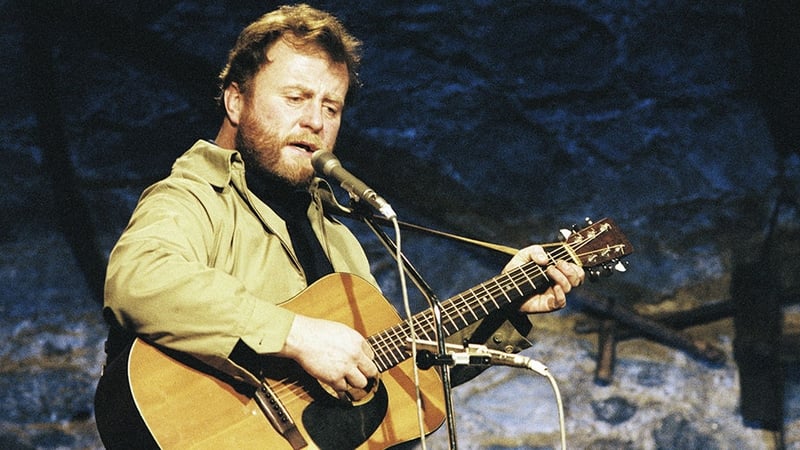
Legendary Irish folk singer Christy Moore was at the centre of a previously unknown diplomatic incident in 2004 when he was locked in a room and questioned over why he was travelling to England by boat by UK officials.
The case is outlined in a summary of a meeting between the Department of Foreign Affairs and the British Home Office in London on 1 December 2004, which included a discussion over a rise in complaints about the treatment of Irish people in the Common Travel Area (CTA).
In relation to Mr Moore’s “high-profile” case, the document shows that he had made a complaint about an inappropriate line of questioning and the locking of an examination room after his vehicle was stopped by port officials at Holyhead alongside his friend Michael Devine earlier that year.
While the Home Office made clear that it could not comment on individual cases, several points were made by Eamonn McKee of the Anglo-Irish Division to Commander Bob Milton, who was the UK’s National Co-Ordinator of Ports Policing, that had a bearing on Mr Moore’s case.
“Mr McKee brought up the issue of inappropriate lines of questioning and the damage that can be done should a person feel that they are being questioned for entertainment or curiosity value.
“Commander Milton stated that this is a training issue. However, should a person feel that the line of questioning was inappropriate, he should make a complaint to the chief constable of the force in question, as it would be up to him or her to address any disciplinary or training questions,” the summary read.
“As regards locking the room Mr Moore was detained in, Milton considered that it was up to the officer to decide whether it was necessary to lock an examination room based on whether the person was likely to leave. He did acknowledge that there could be a health and safety issue.”
In a statement released through his publicist at the time, Mr Moore said none of his equipment, bags or his car was searched by police.
He said it was saddening to think that this kind of treatment of Irish people travelling to the UK was not a thing of the past.
He said he was questioned about his song lyrics and the contents of his briefcase.
Mr Moore said other cars in the queue off the ferry had been searched, but maintained his own vehicle had not been inspected.
During the meeting, the Irish side explained that its main concern was that people were unaware they were being photographed at ports and airports.
The British side responded that the practice was carried out at airports where there is a common departures area for international, CTA and domestic travellers.
“The CTA and domestic travellers are photographed, and a barcode stuck to their boarding cards so as to prevent any possibility of boarding cards being swapped after check-in,” the summary read.
The British side said the photographs were stored for no longer than 48 hours but agreed for the need to display better information signs and improve training.
The department also raised the issue of Irish people being stopped and examined under Schedule 7 of the Terrorism Act 2000, which allowed British police and custom officers the power to stop, question and detain individuals at UK borders.
The officials said there was need for “proper protocols”, so Irish passengers understand why they are being stopped, as well as having “reasonable expectations” on how an interview is conducted.
When it came to passengers missing their flights due to being detained, the British side agreed to a suggestion that a record could be provided to an airline to show a person had been detained outside their control.
As for people being “carded”, the Irish side said people felt like they were being “picked on in some way” when asked to fill out an information sheet on embarkation.
The Home Office said that carding was a “quick way of obtaining information without resorting to an examination”.
[Based on document 2025/127/1]
 Who Watches the Watchers?