
 Posted by
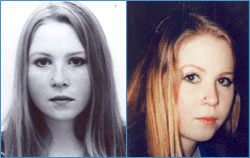
 Just after 11.20pm, she left to walk the short route home to Glenageary to change clothes before heading out again. She never made it. About 500 yards from her home, in a narrow laneway known locally as The Cut, or The Gap, Raonaid encountered her killer. What happened there was fast and vicious. She was stabbed frantically four times with a small kitchen knife, the blade barely an inch and a half wide. People nearby heard it. That is one of the most chilling aspects of the case. Witnesses reported a female voice shouting, “leave me alone,” “go away,” “fuck off.” Then a scream. No one intervened. Perhaps they assumed it was a drunken lovers’ row, something none of your business that might get you in to bother for interfering. Despite her injuries, Raonaid did not die in The Cut. She staggered on for almost two hundred feet, bleeding and disoriented. She collapsed on Silchester Crescent. At 12.33am, her sister Sarah found her there. The fear and desperation Raonaid must’ve experienced and the shock and heartbreak her poor sister felt on the discovery are impossible to imagine. The vicious frenzied murder appeared motiveless. There was no sexual assault or robbery. The knife vanished and has never been recovered. Gardaí took over 4,500 statements and interviewed countless people, yet the case stalled almost immediately. For years, the working assumption was a lone male predator, socially isolated, stalking the streets at night. But it didn’t really fit. As the case was later reviewed by the Garda Serious Crime Review Team, kind of a “cold case” unit, the focus shifted to considering Raonaid was killed not by a male, but a woman. The weapon of choice was a small knife. The attack was frenzied rather than surgically lethal. The wounds were described by some investigators as disfiguring suggestive of rage rather than dominance. Raonaid fought back, and under her fingernails, forensic testing reportedly identified female DNA. Then there were the voices. Witnesses were adamant that the shouts they heard were female. Some spoke of a man “hassling” Raonaid earlier, but others recalled only a woman’s voice in the laneway. Gardaí began to ask uncomfortable questions. Had witnesses mistaken a woman of slight build for a man, especially in an era of baggy clothes and short haircuts. Or had Raonaid encountered more than one person in those final minutes. The absence of sexual motive pushed investigators toward mates falling out or a jealous grudge. One theory suggested Raonaid had recently broken contact with an older acquaintance, a woman known for volatility and violence toward other women. This individual, in her thirties at the time, left Ireland about a year after the murder. She has never been charged. Gardaí have never had enough to extradite or prosecute. But she remains a person of interest. Another bizarre element involved Farah Swaleh Noor, later murdered and dismembered by the “Scissor Sisters”. While drunk, Noor reportedly claimed he had killed Raonaid, allegedly as a threat to the sisters’ mother. Gardaí investigated and ruled him out. In 2009, a tribute website created by friends and family was vandalised by online trolls. Over the years, there have also been sporadic despicable disturbances and vandalism near her grave. Only in 2024 was a formal inquest finally completed, returning a verdict of unlawful killing. The investigation remains open at Dún Laoghaire Garda Station. Gardaí continue to appeal for information, particularly to those who may now doubt the truth of an alibi given in 1999. That phrasing is deliberate. Contact the Serious Crime Review Team NBCI.SCRT@garda.ie Garda Confidential Line: 1800 666 111
 Who Watches the Watchers?