
 Posted by
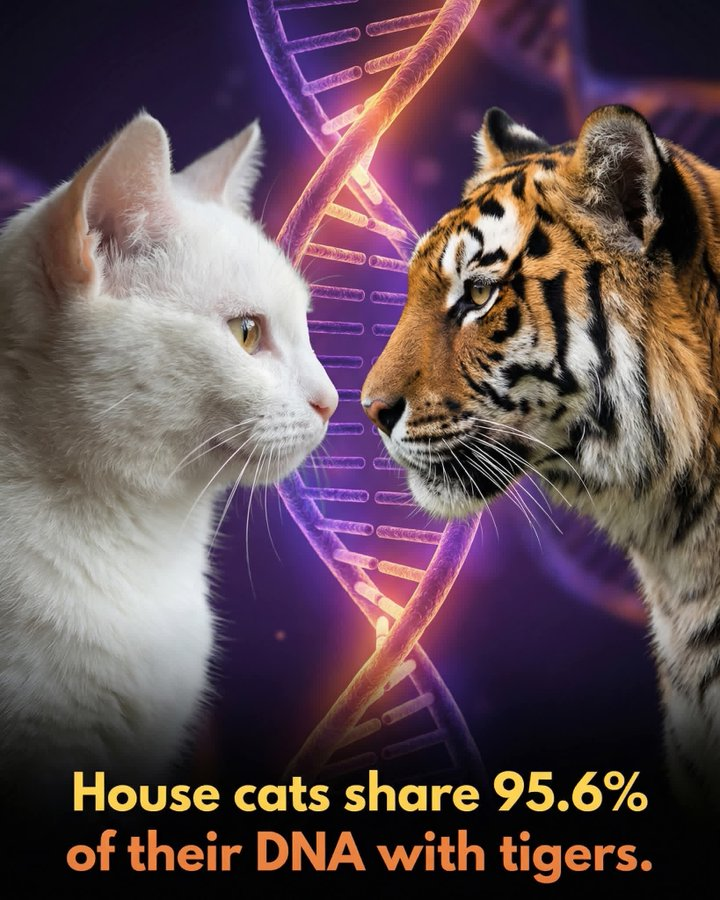
 Behind the purring and the playtime lies the soul of a predator. Recent large-scale genome analyses published in Nature Communications confirm that domestic house cats and tigers share an extraordinary 95.6% of their genetic material. This deep-seated similarity exists because all modern feline species descended from a relatively recent common ancestor. While your pet might weigh only ten pounds compared to a tiger’s six hundred, they are both built from the same fundamental evolutionary blueprint, making your house cat a finely tuned relative of the world’s most powerful big cats. The slight genetic differences that do exist between the species are primarily responsible for size, metabolism, and muscle development rather than basic biological functions. This explains why domestic cats consistently exhibit wild behaviors such as stalking prey, pouncing, and marking territory with such intensity. These traits aren’t just personality quirks; they are ancient instincts hardwired into their DNA. Understanding this genetic link helps pet owners appreciate that their cuddly companions aren’t just mini tigers but are sophisticated hunters sharing nearly the same biological toolkit as their jungle-dwelling cousins. source: Montague, M. J., et al. Comparative analysis of the domestic cat genome reveals genetic signatures underlying feline biology and domestication. Nature Communications.
 Who Watches the Watchers?