
 Posted by
 Imbolc means “in the belly,” which didn’t refer to lockdown dadbods but pregnant ewes. In the agricultural calendar, spring has now begun. The earth is brightening and fertile again after the darkness of winter. Sowing starts and the sacred feminine aspect of nature reemerges.
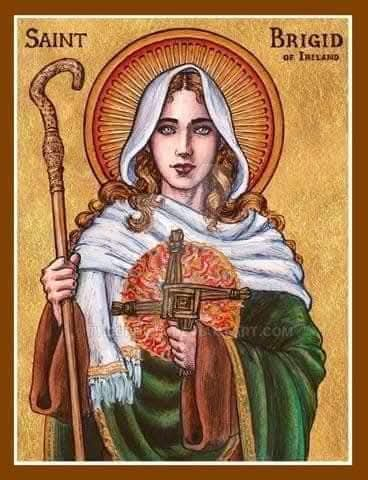
Brigid was originally a pagan fire goddess who became incorporated into the church. You could fill several books with stories of her exploits as a saint. They are mainly thinly-veiled tales from Celtic mythological given a Catholic veneer.
Perhaps more important than the magic/miracles she is associated with is the acknowledgement of the vital importance of girls and women in the cycle of life, the politics of power and the reflection of the divine in humanity. Roles of authority for women in Christianity are thin on the ground.
Almost every Irish kid has made the distinctive St. Brigid’s crosses in school but some other traditions still exist around 1st February. Here’s just a few. Unmarried girls would fashion a doll out of rushes, reeds, or sticks.
This “Brídeóg” would be laid in a little bed on St Brigid’s Eve. Some say that night they would see their future husband in a dream. Older traditions had suitors for the village to physically visit the virgins that night….
In some villages, the Brídeóg would be paraded house to house by girls and “strawboys.” Each home offered coins and food in exchange for a blessing. Another tradition has the women of the house leave strips of cloth and items of clothing outside on St. Brigid’s Eve, preferably on bushes and trees, for the Saint/Goddess to bless as she walks the earth.
Holy wells would be visited to make offerings and prayers for the year to come. It was also traditional on this day to predict the coming year’s weather and harvest.
It’s been a miserable winter for thousands of families. I sincerely wish that everyone who reads this has a springtime full of hope, healing, and happiness. Hang on in there. The sun will rise again!
BUCHANAN: Dublin Time Machine
@RobLooseCannon
Follows you
 Who Watches the Watchers?