
 Posted by
 Updated / Monday, 2 Mar 2026 13:47
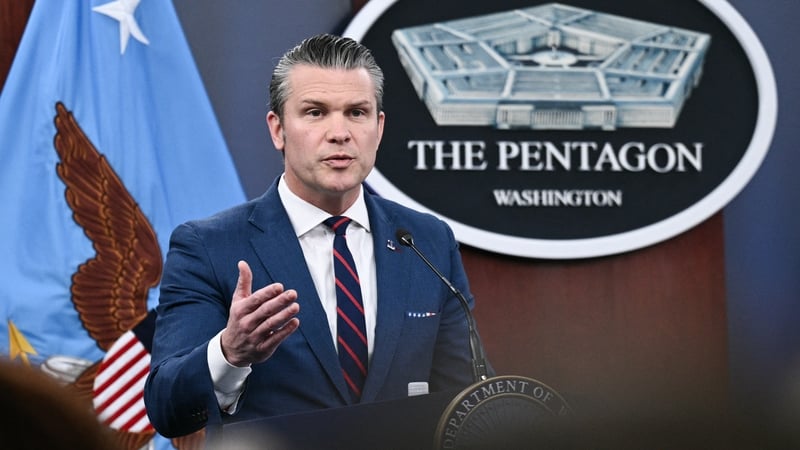
US Defence Secretary Pete Hegseth has said that military operations against Iran would not lead to an “endless war” and that the aim was to destroy Tehran’s missiles, navy and other security infrastructure.
“We’re hitting them surgically, overwhelmingly and unapologetically,” Mr Hegseth said during a press conference at the Pentagon in Washington DC.
“This is not Iraq. This is not endless,” Mr Hegseth said.
He said that the war against Iran was not an effort to build democracy in the Islamic republic.
“No stupid rules of engagement, no nation-building quagmire, no democracy-building exercise. No politically correct wars. We fight to win and we don’t waste time or lives,” Mr Hegseth said.
Meanwhile, US General Dan Caine, the chairman of the Joint Chiefs of Staff, said it would take time for the US to achieve its military objectives in Iran and additional US casualties were expected, adding that the United States has continued to send additional troops to the Middle East even after a massive military build-up.
“This is not a single overnight operation. The military objectives that CENTCOM and the Joint Force have been tasked with will take some time to achieve, and in some cases will be difficult and gritty work,” Gen Caine told reporters.
A fourth US service member died today of injuries sustained in the US operation against Iran.
Gen Caine said US forces have achieved air superiority over Iran.
Strikes by American forces “resulted in the establishment of local air superiority. This air superiority will not only enhance the protection of our forces, but also allow them to continue the work over Iran,” Gen Caine said.
Earlier, US President Donald Trump said he was “very disappointed” with British Prime Minister Keir Starmer for not allowing the US to use the Diego Garcia air base to carry out strikes on Iran, the Daily Telegraph quoted the president as saying in an interview.
Britain had reportedly initially denied the US permission to conduct air strikes from its bases, but yesterday evening Mr Starmer said he was accepting a request for their use in any “defensive” strikes the US wanted to make against Iranian targets.
In the interview, Mr Trump said that it took “too long” for Mr Starmer to change his mind.
“That’s probably never happened between our countries before,” he said, adding: “It sounds like he was worried about the legality.”
The US leader also claimed that elements of the Iranian leadership want to talk.
Iran’s President Masoud Pezeshkian yesterday said a leadership council composed of himself, the judiciary head and a member of the powerful Guardian Council had temporarily assumed the duties of Supreme Leader.
In an X post this morning, Ali Larijani, who was adviser to Iran’s Khamenei, said his country would not negotiate with Mr Trump. He said the US president had “delusional ambitions” and was now worried about US casualties.
 Who Watches the Watchers?